
Emergency Air Duct Cleaning Near Me: What Huntington Beach Homeowners Should Do First
Most people call us after they’ve already done the one thing that makes a contamination problem worse: they cranked up the HVAC to “clear the air.” If your ducts have taken on smoke, water, rodents, or worse, the first move is to shut the system down, not run it. What you do in the first day decides whether a single cleaning fixes the problem or whether you’re looking at remediation, drywall, and a fight with your insurer. This is the order to do it in.
Work through these steps before you start dialing. If you’d rather have a trained eye walk you through it, call (866) 937-8807. We answer 24/7.
What’s the very first thing to do when ducts are contaminated?
Turn off the HVAC system at the thermostat and, if you can reach it safely, at the breaker. That’s the answer. When an air handler has been exposed to water, mold spores, smoke residue, or rodent waste, running the fan pulls that contamination through the supply trunks and pushes it out of every register in the house. What starts as a problem in one attic unit can become a whole-home problem fast. A flooded air handler left running in a warm, humid house gives mold everything it needs, and the ducts are the highway.
Whether it’s safe to run the system pending cleaning depends on what happened:
- Water intrusion: keep it off until the air handler and surrounding ductwork are inspected and dried. Running a wet system spreads moisture and spores.
- Smoke or fire residue: keep it off. The fan distributes soot particles and the smell into rooms that weren’t affected.
- Rodent evidence: keep it off, and don’t stand at an open register breathing the airflow. Droppings and nesting material are a real health concern.
- Sewage backup into a register or drain line: keep it off. This is the most serious category and needs professional containment.
- Light dust complaint with no event behind it: the system can usually keep running normally while you book a standard air duct cleaning.
If you’re not sure which category you’re in, treat it as the conservative one and leave the system off.
How does each emergency scenario change your first steps?
Not every duct emergency is the same, and the containment priority flips depending on what got in. Here’s how we think about the four we handle most.
Fire and smoke
Smoke residue coats duct walls and the inside of the air handler, and it keeps off-gassing for weeks. Your priority is containment: close doors to unaffected rooms, don’t run the fan, and photograph everything before anyone touches it. Smoke damage claims live or die on documentation, so get the pictures first. Cleaning smoke residue is not the same job as dust removal; it needs surface contact cleaning and a sanitizing step, not a quick vacuum.
Water intrusion
Water in ducts comes from a flooded air handler, a failed condensate line, or a roof leak that found the trunk line. The priority is stopping moisture and starting drying. Mold can take hold in a damp duct within days in warm weather, and Huntington Beach’s mild, humid stretches give it plenty of help. Get the source fixed, get air moving through the space (fans and open windows are fine), and get the ductwork inspected before you run the system again.
Rodent evidence
Droppings, nesting material, or the smell of urine near a register means rodents have been inside the ductwork. Priority: don’t disturb it and don’t breathe the airflow. Rodent waste carries pathogens, and a shop vac makes the problem airborne. This job needs HEPA-filtration extraction and a sanitizing step afterward, plus a plan for the entry point so they don’t come back.
Sewage backup
This is a contamination event, not a cleaning job. Sewage carries bacteria that a household vacuum cannot manage. Keep the system off, keep people and pets away from affected registers, and call a pro who carries negative-air equipment. If a remediation company is already involved in the water damage, coordinate with them so the ductwork gets handled as part of the same scope.
What documentation do you need before any cleaning starts?
Before a single brush goes into a duct, document the condition of your home and system. If you’re filing an insurance claim, this folder is what makes the difference between a covered loss and an argument. Build it before anyone starts work:
- Photograph and video everything. Every register, the air handler, the visible duct runs, water stains, soot lines, droppings, damaged insulation. Wide shots and close-ups.
- Write a timeline. When the event happened, when you shut the system off, who you called, and when.
- Save the cause evidence. Photos of the failed water heater, the roof leak, the fire damage. Don’t clean up the source before you’ve documented it.
- Get a written scope and estimate. A proper provider tells you what will be cleaned, how, and with what equipment, in writing, before work begins.
- Ask for photo documentation of the work itself. Before-and-after photos of your own ducts, not stock images. This protects you if a claim gets questioned.
- Keep receipts and correspondence. Every invoice, every email, in one folder.
We can work with your insurer on the paperwork side, and a written estimate with photo documentation makes that conversation a lot shorter. Store the folder digitally and back it up.
Why does the equipment matter so much in an emergency?
An emergency job is not a routine maintenance call with a scarier story. The difference is contamination level, and the equipment has to match it. This is where a lot of same-day “duct cleaners” fall short, showing up with a shop vac and a wand when the job needs real containment.
Three tools do the heavy lifting on a serious job:
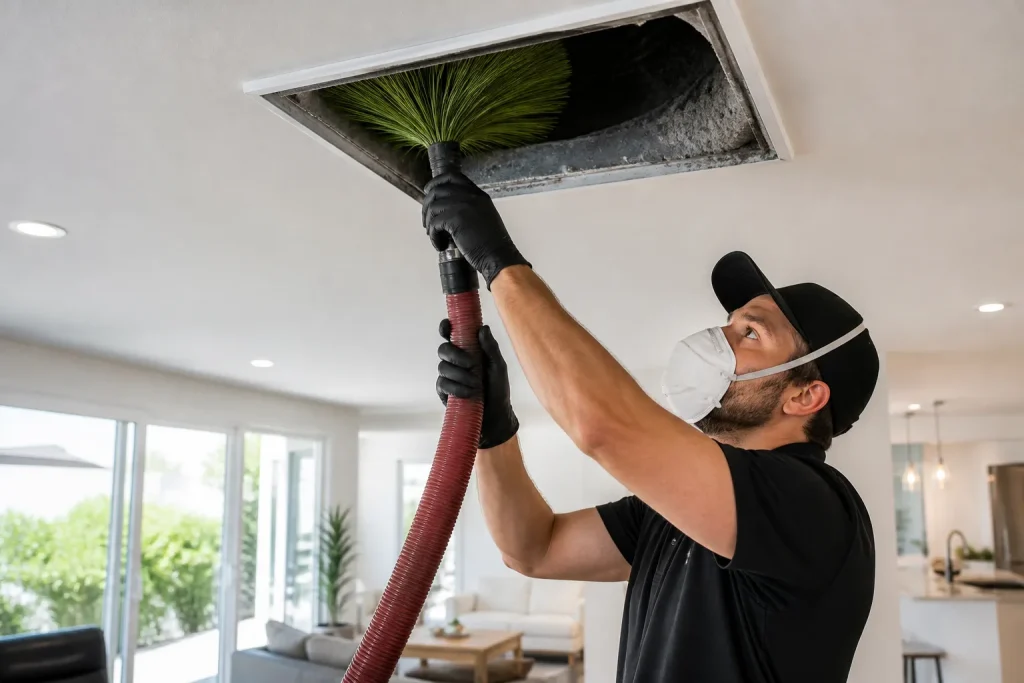
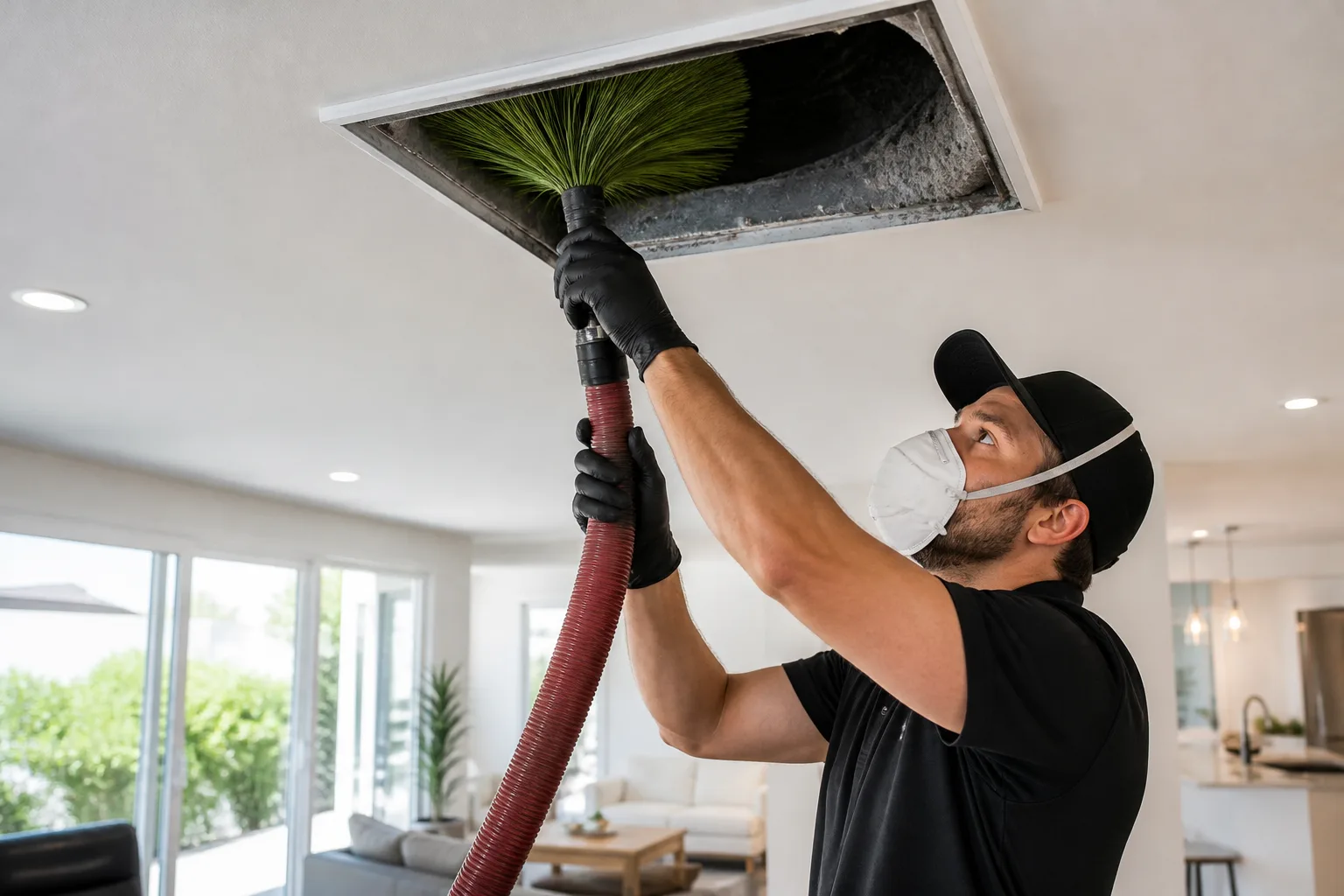
- Contact cleaning (Rotobrush): a rotating brush system that physically scrubs duct walls under vacuum. It’s the same platform professional duct cleaning contractors use nationwide because it gets surfaces actually clean rather than just blowing dust loose.
- HEPA extraction (Nikro): captures fine particulates at the source. In a rodent or smoke job, the fine particles are the health risk, and a filtration vacuum keeps them from recirculating into your living room while the work happens.
- Negative-air equipment (Abatement Technologies): this is the piece most competitors simply don’t own. Negative-air pressure keeps the work area under vacuum so contamination is pulled toward the equipment instead of drifting into the rest of the house. In a sewage or mold-adjacent job, that containment is the difference between cleaning one system and contaminating a home.
We match the equipment to the job. A routine cleaning doesn’t need negative-air containment; a remediation-adjacent job absolutely does. Our technicians have up to 10 years of experience reading which category a call falls into, and we also use Guardsman surface-protection products so your furniture and flooring survive the process.
How do you vet a same-day duct cleaning company in a hurry?
When you’re in a hurry, you don’t have time for a long interview. Three questions filter out the operators who can’t handle an emergency, and you can ask them on the first phone call:
- “What equipment will you bring for this specific job?” A serious answer names the machines. If the response is vague, or the plan is a shop vac and a brush, that’s your answer.
- “Can you do negative-air containment if the contamination level calls for it?” If the company doesn’t own the equipment, they can’t contain a sewage or mold job. Ask plainly.
- “What does the written estimate cover, and will I get before-and-after photos of my own ducts?” One flat price per system, agreed before work starts, is the honest way to quote. Per-vent pricing and teaser coupons are where the bait-and-switch starts. Photos of your own ducts are how you know the work was actually done.
If those three answers hold up, you’re likely talking to a real operator. If any of them gets hand-waved, keep calling. A company that can’t explain its equipment on the phone can’t run it in your house, and in Huntington Beach’s tighter lots and shared walls, cross-contamination is a neighbor problem too.
One more thing: ask what they’ll do about the source. Duct cleaning doesn’t stop rodents from getting back in, and it doesn’t fix a leaking roof. A good provider tells you what needs fixing beyond the ducts.
When should you call a pro instead of handling it yourself?
Call a pro the moment there’s smoke residue, water damage, rodent waste, or sewage in the system. Those are not DIY categories, and a shop vac can make them worse. If it’s simple visible dust and no event behind it, you can book a standard cleaning without the urgency. The same-day response is worth having when the health or structural risk is real, not for routine upkeep.
Call (866) 937-8807. We answer 24/7. Fast dispatch from 7am to 7pm, Sunday through Friday.
Related services in Huntington Beach
If a dryer vent is part of the picture, a clogged one is a fire risk on its own, and dryer vent cleaning belongs on the same visit. If the air handler took the hit, whole-system HVAC cleaning addresses the coil and cabinet, not just the ducts. For long-term air quality, we install and service Honeywell and Aprilaire systems so clean ducts stay clean.
The Bottom Line
The order matters more than the speed. Shut the system down, identify what got in, document everything, and then hire based on equipment and a written scope. That sequence protects your home, your health, and your insurance claim. Skip it, and you may pay to clean the ducts twice.
If you’re in Huntington Beach and need help, Air Duct Cleaning Huntington Beach Pros offers free estimates – call (866) 937-8807. One flat price per system, agreed before work starts, with before-and-after photos of your own ducts. And if you want the full picture of what we do, start with our air duct cleaning in Huntington Beach page to see how a whole-system job comes together.
Frequently Asked Questions
Yes. Shut it off at the thermostat and at the breaker if you can reach it safely. Running the fan pushes contamination through the supply trunks and into every room. Leave it off until a professional inspects the system and confirms it’s safe to run again.
Mold can establish in a damp duct within days, not weeks. Warm, humid conditions speed it up. That’s why water intrusion is a “shut it off and dry it out” problem, not a “wait and see” problem. If the air handler got wet, get it inspected before you run the system.
It depends on the cause and your policy. Water damage, fire, and sewage backups are often covered under specific provisions, while routine maintenance usually isn’t. The key is documentation: photos, a written timeline, and a written scope before work starts. We can work with your insurer on the paperwork, but your policy is the final word. Call (866) 937-8807 to talk through what documentation a claim will need. Estimates are free.
Ask for before-and-after photos of your own ducts during the work, plus a written summary of what was found and what was done. A visual record and a clear scope are how you verify the job. If a provider can’t produce photos of your system, that’s a red flag.
Written by the team at Air Duct Cleaning Huntington Beach Pros.
Need Air Duct Cleaning Help?
Call Air Duct Cleaning Huntington Beach Pros - the local pro we connect you with is licensed and insured, with free written estimates in Huntington Beach.
(866) 937-8807