
Last updated November 24, 2026
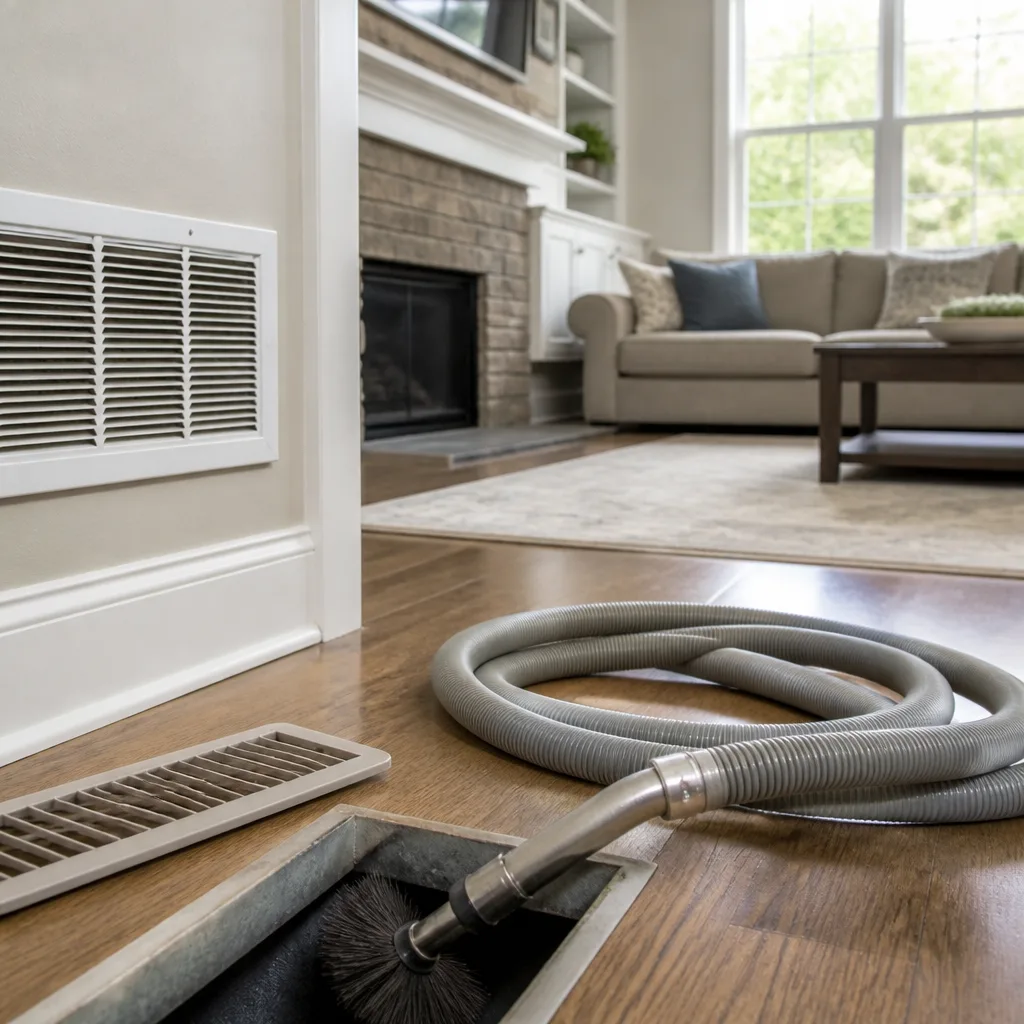 Whole-home duct cleaning
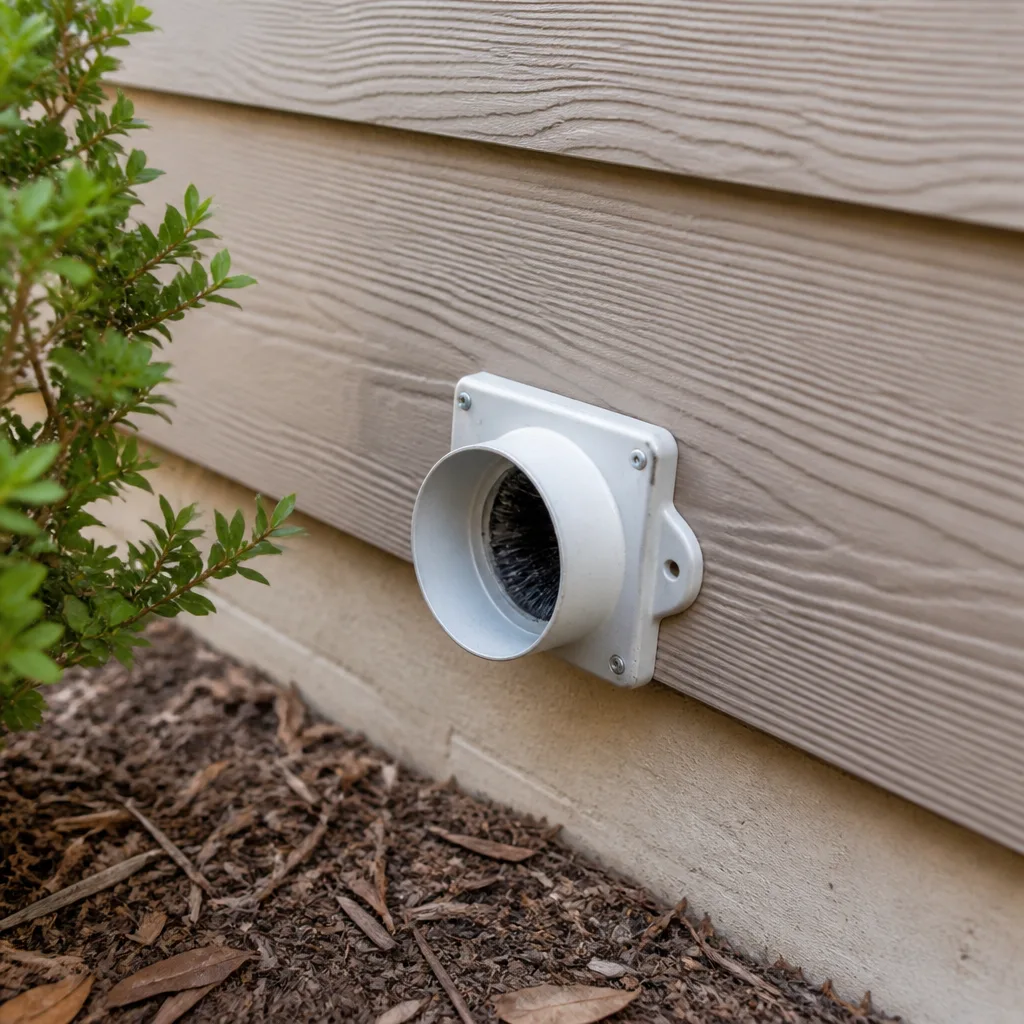 Dryer vent cleaning
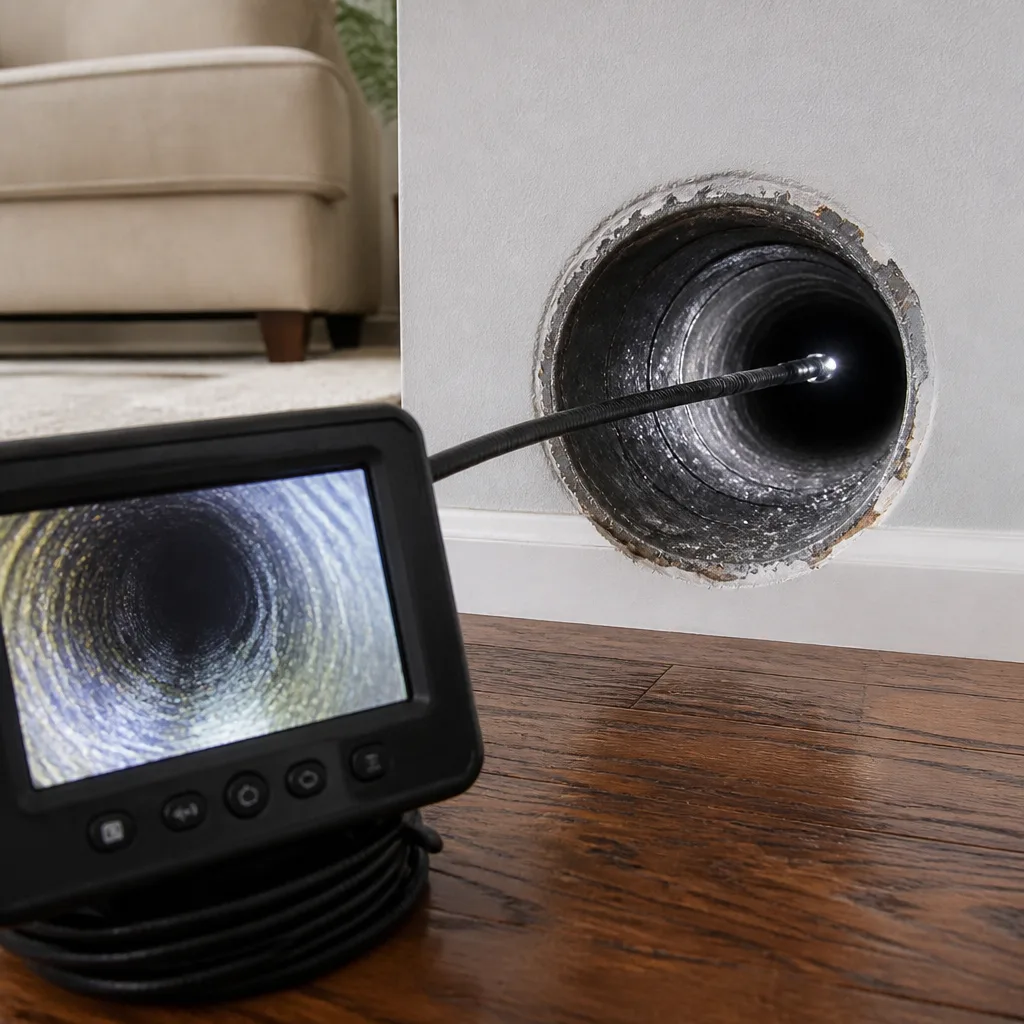 Camera inspection
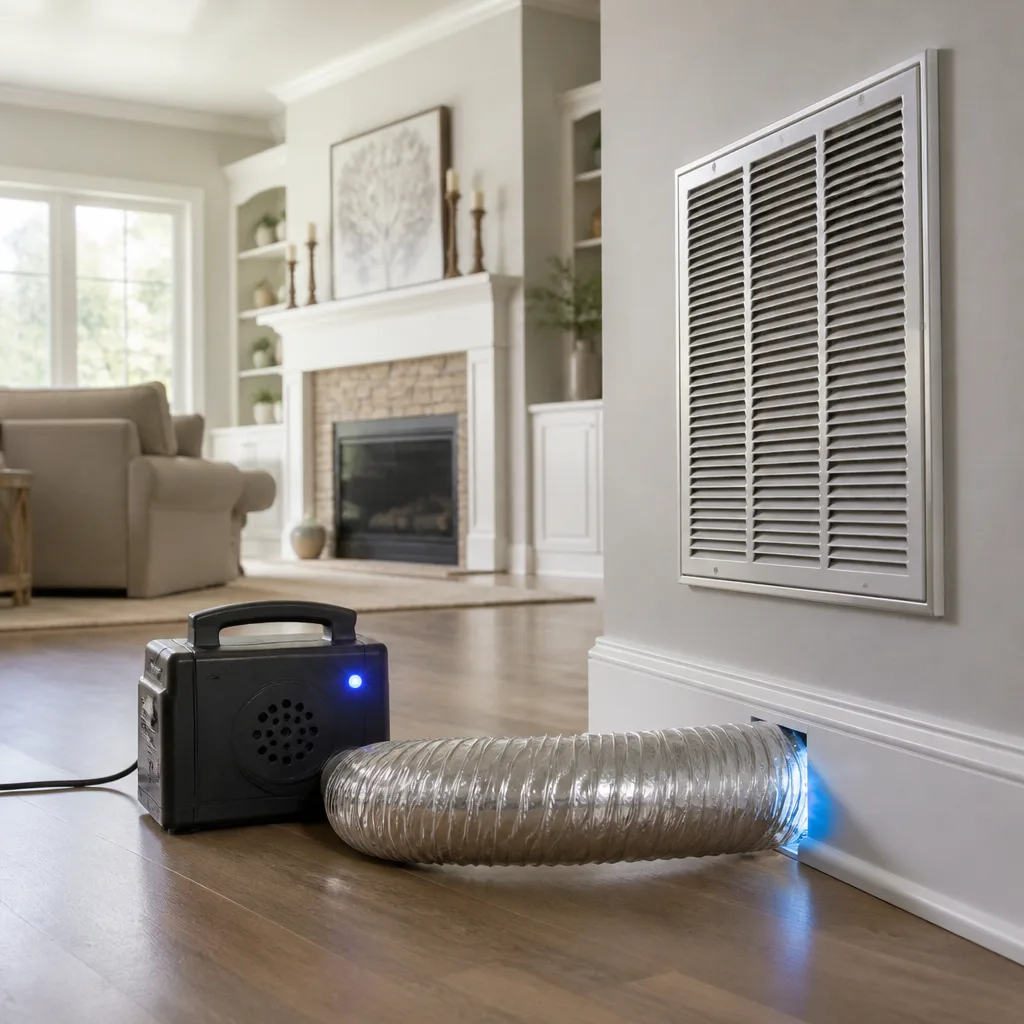 Sanitizing & deodorizing
Whole-system duct and dryer vent check with before-and-after photos - you see exactly what came out of your vents
That "$99 whole-house special" is a bait ad - the real number appears once they are in your hallway, or the "clean" is a shop-vac at the register. We photograph the inside of your ducts before and after instead.
How to Hire an Air Duct Cleaning Contractor in Huntington Beach: A Step-by-Step Guide
Most homeowners shop for duct cleaning the same way they shop for a haircut: whoever offers the lowest advertised price gets the job. That logic fails badly here. The ducts above your ceiling are invisible once the technician arrives, so the company controls almost everything you can’t see. A coupon that says one low number and an invoice that says far more is the signature move of the worst operators in this trade, and Huntington Beach has seen its share of them. This guide walks through the four questions to ask before booking, how to read a quote line by line, what to verify before any equipment is switched on, and why a rock-bottom quote can’t fund professional extraction. You’ll finish able to tell a real contractor from a mailer.
Quick Answer
To hire an air duct cleaning contractor in Huntington Beach, ask four questions before you book: which equipment brand and model will be used, how long the job will take, what is included versus what costs extra, and whether the company holds NADCA certification. Then compare line-item quotes instead of flat rates, and on arrival confirm the equipment matches what was promised and that negative-air containment is being set up before work begins. A contractor who answers all four specifically is a contractor worth hiring.
Styles & brands we work with
- Whole-home duct cleaning
- Dryer vent cleaning
- Camera inspection
- Sanitizing & deodorizing
Table of Contents
- The Four Questions to Ask Before You Book
- How to Read an Air Duct Cleaning Quote
- What to Verify on Arrival Before Work Starts
- Why the Cheapest Quote Can’t Be Honored at Professional Quality
- California Licensing: What a C-20 License Covers
- What Huntington Beach Homes Put Through Their Ducts
- A Printable Vetting Checklist
The Four Questions to Ask Before You Book
If you ask nothing else, ask these. Each one has a specific answer or it doesn’t, and a vague reply is your signal to move on. In our experience, the contractors who fail these four questions fail them the same way: they don’t know their equipment, they can’t estimate time, they hide scope, and they avoid the certification question. Asking up front removes most of the guesswork.
- What equipment brand and model will you use, and why that one for my home? A real answer names a system. Rotobrush contact-cleaning, Nikro HEPA extraction, and Abatement Technologies negative-air units are three different platforms for three different job types. A company that says “we use a vacuum” has not answered the question. The answer should also connect equipment to complexity: a routine single-story home and a post-remediation job don’t call for the same setup.
- How long will the job take? A specific range, not “a few hours.” Time is a scope signal. A company that budgets two hours for a whole-house job isn’t planning to clean the whole house. When the estimate is short and the scheduled window is short too, ask what exactly gets cleaned. You’ll usually hear it’s the trunks and plenum only.
- What’s included, and what gets upsold? Legitimate companies quote a per-system price for the work defined in the estimate. Ask whether sanitizing, sealing, register cleaning, and dryer vent service are inside that price or separate line items. If they’re separate, that’s fine. That’s how the math works out. What’s not fine is discovering that after the crew arrives.
- Are you NADCA certified, and can I see it? NADCA (the National Air Duct Cleaners Association) sets standards for the trade. Certification isn’t universal, but it’s a clear line between companies that follow a code of ethics and companies that follow their own incentives. Ask for the certification and confirm who holds it.
Answer those four well and you’ve eliminated most of the bad contractors before they knock on your door. The rest of this guide is about everything that happens after the booking is made.
How to Read an Air Duct Cleaning Quote
A legitimate quote spells out what will be cleaned and what each part of the job costs. A single flat rate with no breakdown isn’t a bargain. It’s an open-ended scope that lets the company promise one thing and bill another. The line items themselves are your best read on how the company thinks about the work.
Legitimate quotes for Air Duct Cleaning Huntington Beach include a system count, the length of the runs, what gets cleaned (supply and return sides, registers, plenum, blower), and any optional add-ons priced separately. When you see a quote like that, you can compare it against other quotes on a level field. When you see a flat price, you can’t, and that’s the point. Scope ambiguity is how a quote becomes an invoice.
What a well-built quote includes
- Number of systems or zones and the approximate length of ductwork
- Which components are covered: supply ducts, return ducts, registers and grilles, air handler or plenum
- The equipment to be used and, when relevant, the containment method
- Sanitizing, sealing, or duct repair as separate lines if applicable
- Dryer vent cleaning as its own item, or a stated reason it isn’t needed
- What happens if the crew finds damaged ductwork or contamination beyond the stated scope
What a badly built quote includes
- A single number, no breakdown, no scope description
- An unusually low figure tied to “up to 10 vents” or similar limits
- No mention of equipment or containment
- Pressure to book before the price goes up
If a quote is honest, the person who wrote it should be comfortable explaining every line before you sign. Ask for that explanation. You’re not being difficult. You’re doing exactly what a contractor expects from a responsible homeowner.
What to Verify on Arrival Before Work Starts
A quote describes a plan. Arrival is when the plan has to hold. The equipment a technician rolls in with should match what the company described on the phone. Do a short walkthrough before work begins and you’ll spot discrepancies while they’re still easy to resolve.
- Confirm the equipment matches the description. If the phone conversation or the written estimate promised a Rotobrush contact-cleaning system and a Nikro or Abatement Technologies extraction unit, the crew should arrive with equipment from those brands. A single shop-style vacuum that fits in a car trunk is not the same tool, and it doesn’t clean a whole system.
- Watch for negative-air setup. If contamination is heavy or the job requires containment, the crew should place an Abatement Technologies or comparable negative-air unit and mask registers before work starts. Containment protects the rest of your home. Without it, loosened debris can recirculate into living spaces during the job.
- Check surface protection. Guardsman-style floor and corner protection is standard on professional jobs. Ask about it if you don’t see it.
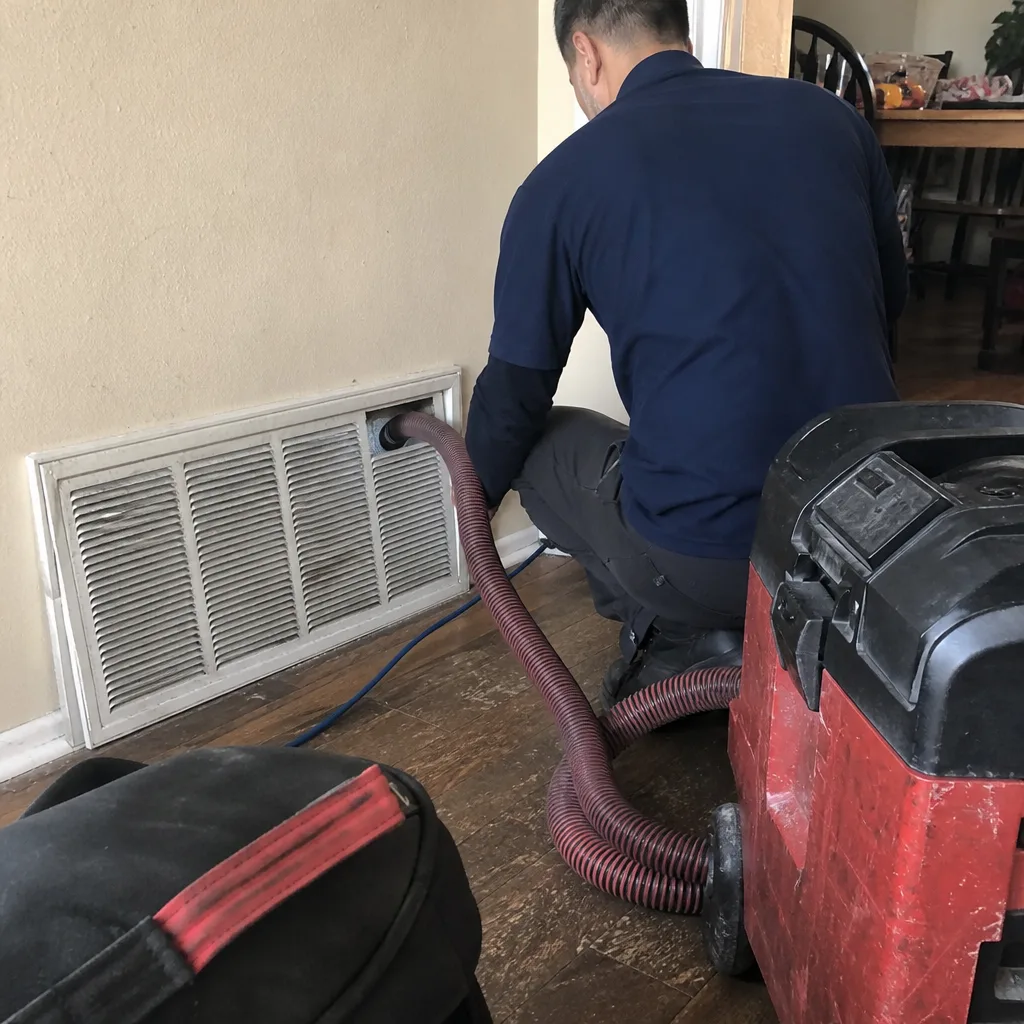
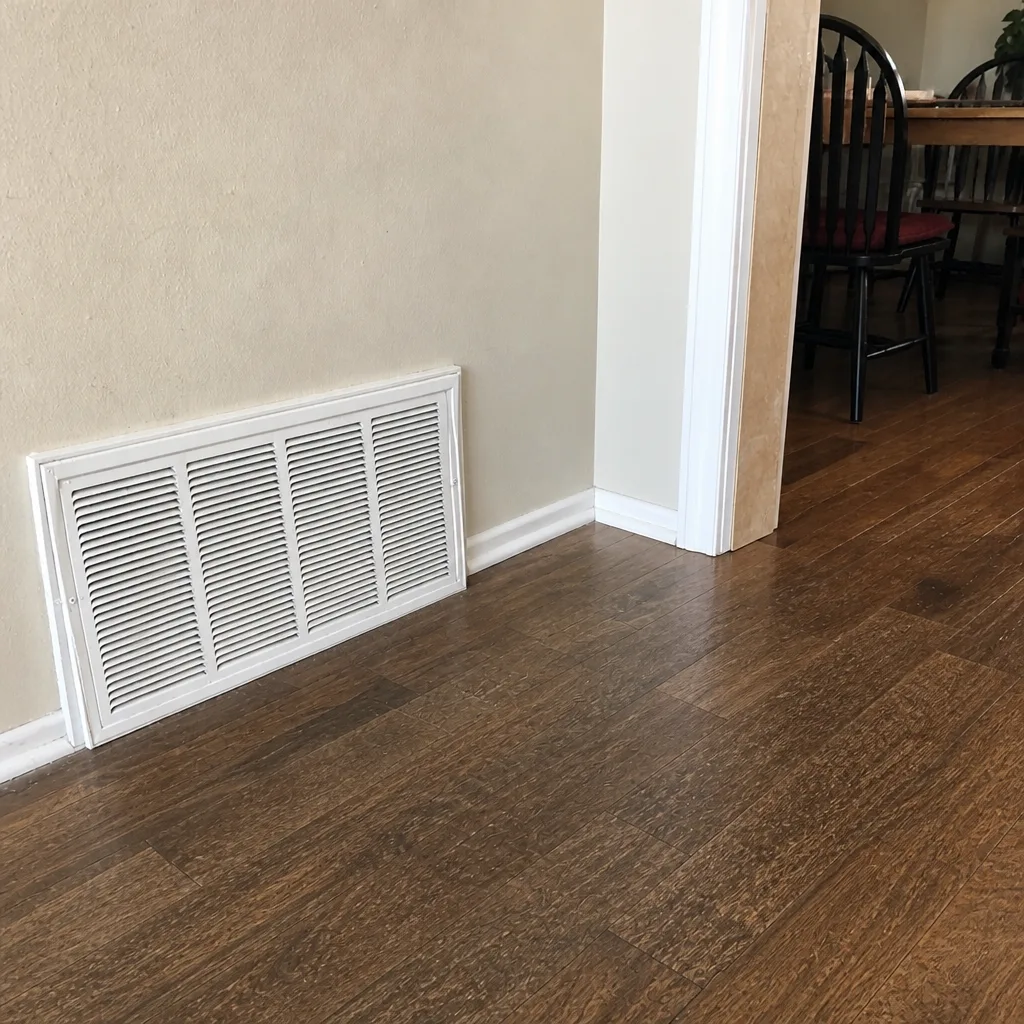
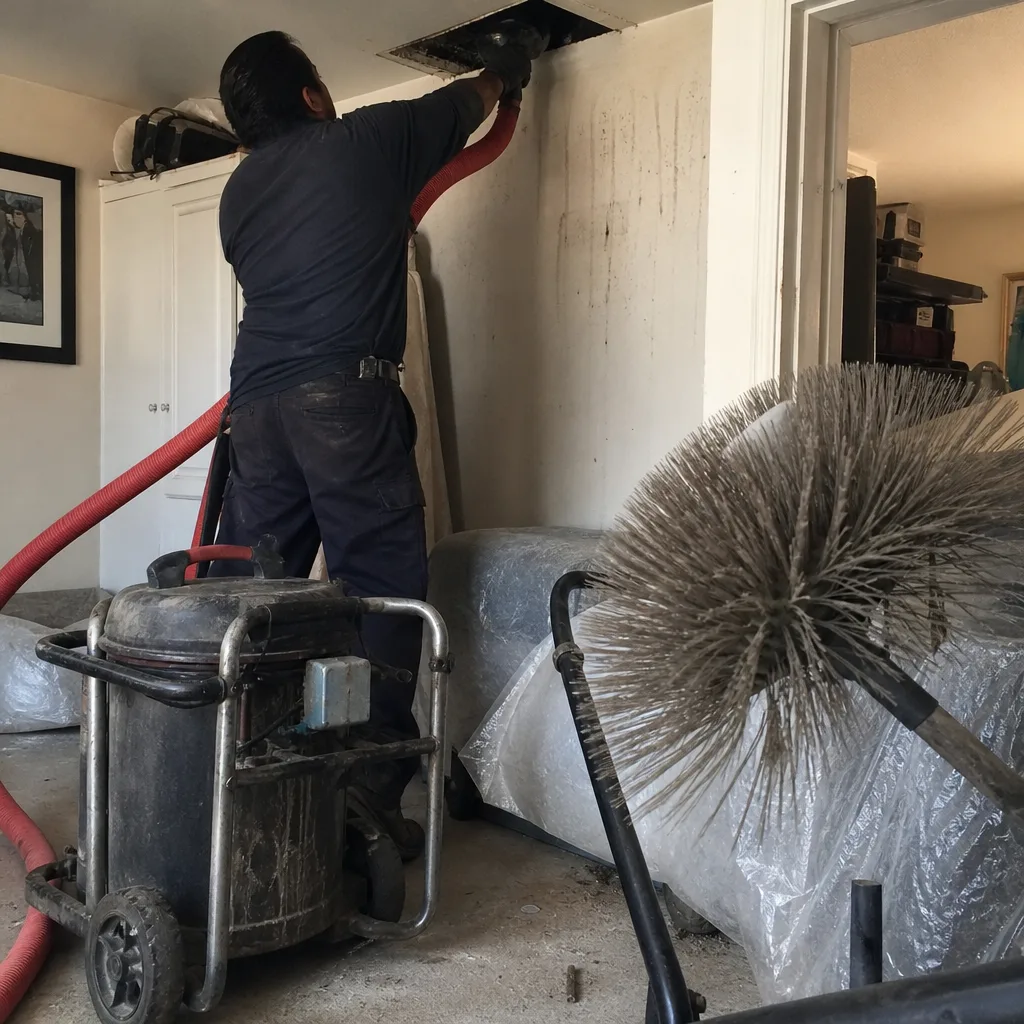
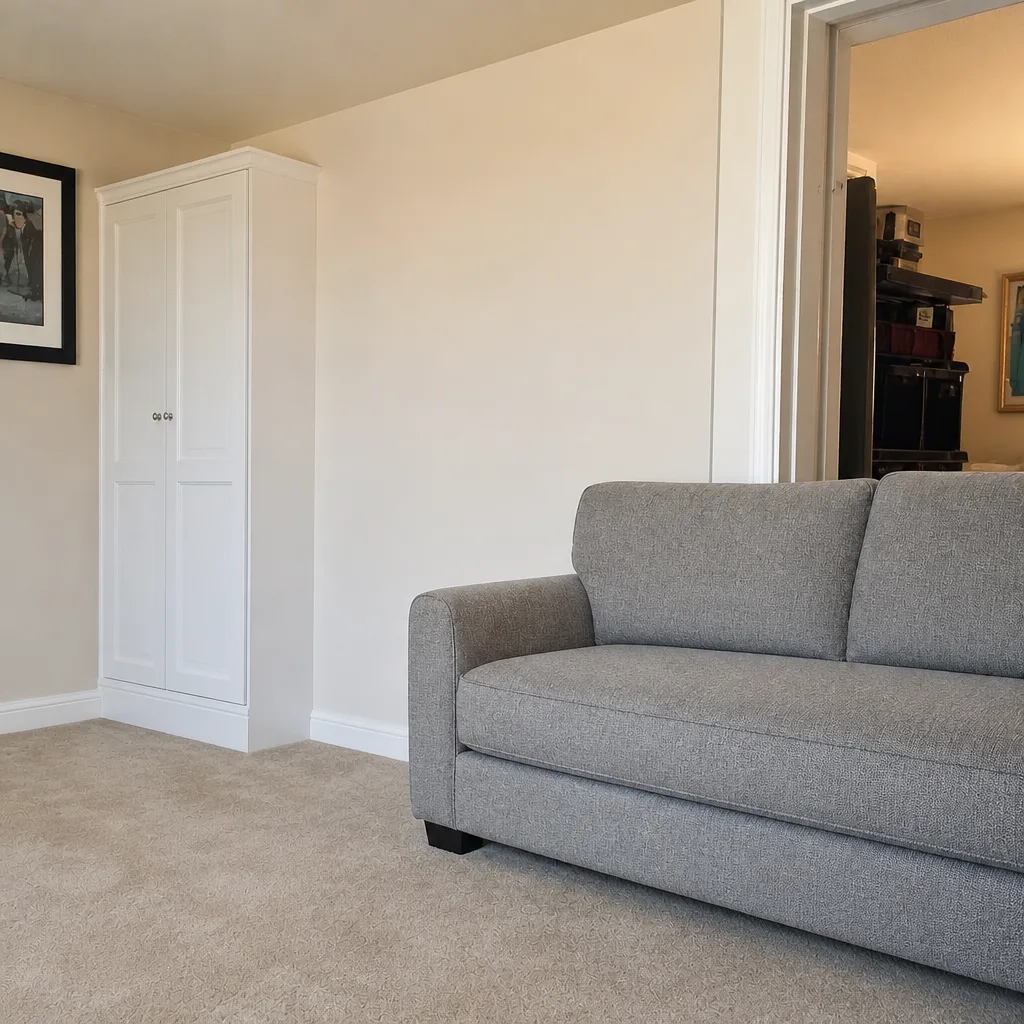
- Take a before-picture of a register and the air handler. A good company will document this themselves, but you should be able to see what’s entering and leaving the system. Before-and-after photos of your own ducts are one of the clearest ways to know the work was done.
- Ask about the access points. Where will they cut or open the system? How will they seal it afterward? If the answer is “we won’t need access,” question it.
The pattern here is verification, not suspicion. A professional crew expects a homeowner who knows what to look for and is happy to walk through the plan. A company that resists a short pre-work check is telling you something about the rest of the job too.
Why the Cheapest Quote Can’t Be Honored at Professional Quality
HEPA extraction equipment is expensive to run. A truck-mounted or portable high-capacity HEPA unit consumes electricity, requires filter maintenance, puts hours on moving parts, and needs a technician who knows how to operate it. All of that costs money on every job. When you see a quote that’s a fraction of the market rate, ask yourself how those costs get covered. The answer, too often, is that the crew doesn’t run the equipment long enough, runs a different tool than promised, or makes up the difference with add-ons once they’re standing in your hallway.
The bait-and-switch model depends on the homeowner not knowing the underlying economics. Once you know roughly what professional equipment costs to operate per hour, the low-coupon offer stops looking like a deal. It looks like a schedule that pays for a much smaller job than the one you described.
None of this means you should pay top dollar for everything. It means the ceiling and the floor of the market are far apart, and the floor isn’t where you want to land. On a routine home, a well-priced job from a company that runs the right equipment is a good investment. If a quote is well below what other contractors quoted for the same scope, the quote isn’t a discount. It’s a change in scope you haven’t been told about.
In our experience, the estimate is the single most reliable read on a company. Ask for the itemized write-up. Ask who runs the equipment. Ask how long the job takes and how much time is spent per zone. A company comfortable in the numbers is a company comfortable with the work.
California Licensing: What a C-20 License Covers
For any duct work tied to an HVAC system, the relevant California license is the C-20 Warm-Air Heating, Ventilating, and Air-Conditioning Contractor license. It covers the installation, maintenance, and repair of the systems that your ducts connect to. A totally general contractor’s license doesn’t specifically cover that work. When you’re vetting a duct cleaning company, ask which license they operate under. The right answer starts with C-20.
Licensing asks one question the coupon never does: is the person doing the work accountable to a board that can be reached if something goes wrong? Confirm the license status through the state board’s lookup, not a photo of a business card. And confirm insurance. A licensed and insured contractor is the standard, and it’s a low bar that surprisingly few operators clear under their real business name.
For Huntington Beach homes in older neighborhoods where ductwork was retrofitted into a system that’s been added onto or altered over time, the C-20 scope matters even more. Duct repair and sealing often touch the air handler, the plenum, or the return side of the system, and those components live in C-20 territory. When you combine professional cleaning with a licensed repair and sealing scope under one responsible company, you avoid the situation where two contractors point at each other after a job goes sideways.
Some duct cleaning companies pair the cleaning with whole-home air quality hardware from Honeywell and Aprilaire. That work, too, belongs under an HVAC-scoped license. If a company installs or services those systems, ask to see both the license and the manufacturer authorization.
What Huntington Beach Homes Put Through Their Ducts
Huntington Beach sits in a mild coastal climate, which shapes how its duct systems collect debris. Winters are gentle, so the HVAC system often runs in both heating and cooling modes across the same year. That cycling pulls different kinds of dust and particulate through the same duct network. The result is a house that needs cleaning for both heating-season dust and cooling-season dust, not just one.
Remodeling and renovation are a big driver in Huntington Beach. A kitchen, bath, or addition project pushes drywall dust and construction debris into every return and supply. Even when doors are taped off, fine particulate gets circulated the moment the system turns back on. If your home has been renovated in the last few years and you can taste dust in the air, the ducts are the likely reason.
Older Huntington Beach neighborhoods often have ductwork that was added to a system over multiple decades. Runs may have been extended, sealed with tape that eventually broke down, or joined at elbows that never had a proper connection. Cleaning alone doesn’t fix those. Duct repair and sealing, done at the same visit, does.
Humidity is another factor. The mild, damp air in this part of Orange County can build up inside surfaces that never quite dry, especially on poorly insulated runs or on ducts that pass through unconditioned spaces. On jobs where we find evidence of moisture or contamination beyond routine dust, we run negative-air containment with Abatement Technologies equipment to keep the cleanup inside the work area. That’s not a scare tactic. It’s the reason equipment matters, and it’s the reason we match the equipment to the job.
Dryer vents are part of the same story. Lint accumulates faster in Southern California homes where laundry rooms are interior and vent runs are long. Dryer vent cleaning is often overlooked by HVAC-focused companies, and it’s one of the more preventable fire risks in the home. If you’re already having ducts cleaned, ask about dryer vent cleaning in the same visit.
A Printable Vetting Checklist
Print this. Walk through it before booking, and again when the crew arrives. Each item maps to a real point of failure in this trade, and the ones a company can’t answer tell you more than anything it can.
Before you book
- Equipment brand and model named specifically, and matched to the job type
- Estimated time on-site stated in a range, not “a few hours”
- Written scope: number of systems, duct length, registers, air handler, plenum
- Sanitizing, sealing, repair, and dryer vent clearly listed as included or quoted separately
- NADCA certification status confirmed
- California C-20 HVAC license and insurance confirmed through the state lookup
- One price per system stated in writing, with the total fixed before work begins
- Before-and-after photos promised as part of the job, not as a paid extra
On arrival
- Equipment matches what was described
- Negative-air containment placed if scope calls for it
- Surface protection (Guardsman or equivalent) set up on floors and around work areas
- Access points explained before any cuts are made
- Before photos taken of an accessible register and the air handler
- Any change in scope stops the work until it’s approved in writing
After the job
- After photos shown for the same locations documented before work
- System tested and airflow verified
- Written summary of what was cleaned and any repairs or sealing done
- Recommendation for future cleaning based on your home, not a preset schedule
If a company clears this entire checklist, the rest is straightforward. If it clears only half, ask why. The conversation is worth having.
Common Mistakes to Avoid
- Booking from a coupon without reading the scope. A low advertised price usually covers a limited number of vents or a limited part of the system. The price on the mailer isn’t the price on the invoice, and Huntington Beach mailboxes see plenty of these.
- Assuming a license shown on a card is the right license. Ask which classification covers HVAC and duct work. A generic contractor’s license isn’t the same as a C-20.
- Skipping the equipment question. If you never ask what equipment will be used, you have no way to check whether the crew arrived with it, and no way to tell whether the job matched the quote.
- Letting a technician upsell mid-job without a revised written estimate. A legitimate company stops, explains any scope change, and asks you to approve it in writing. If they don’t, the work stops.
- Ignoring the dryer vent. Lint buildup in the vent run is a real fire hazard, and it’s separate from the HVAC ducts. Ask about it as its own line item, not as an afterthought.
- Treating before-and-after photos as optional. Photos of your own ducts are the clearest evidence the work was done. Ask for them, and ask for them for the same spots that were documented before the crew arrived.
- Believing any certification or licensing is universal. NADCA certification and C-20 licensing exist, but not every contractor holds them. Confirm both, don’t assume either.
See the difference
 Before
 After
 Before
 After
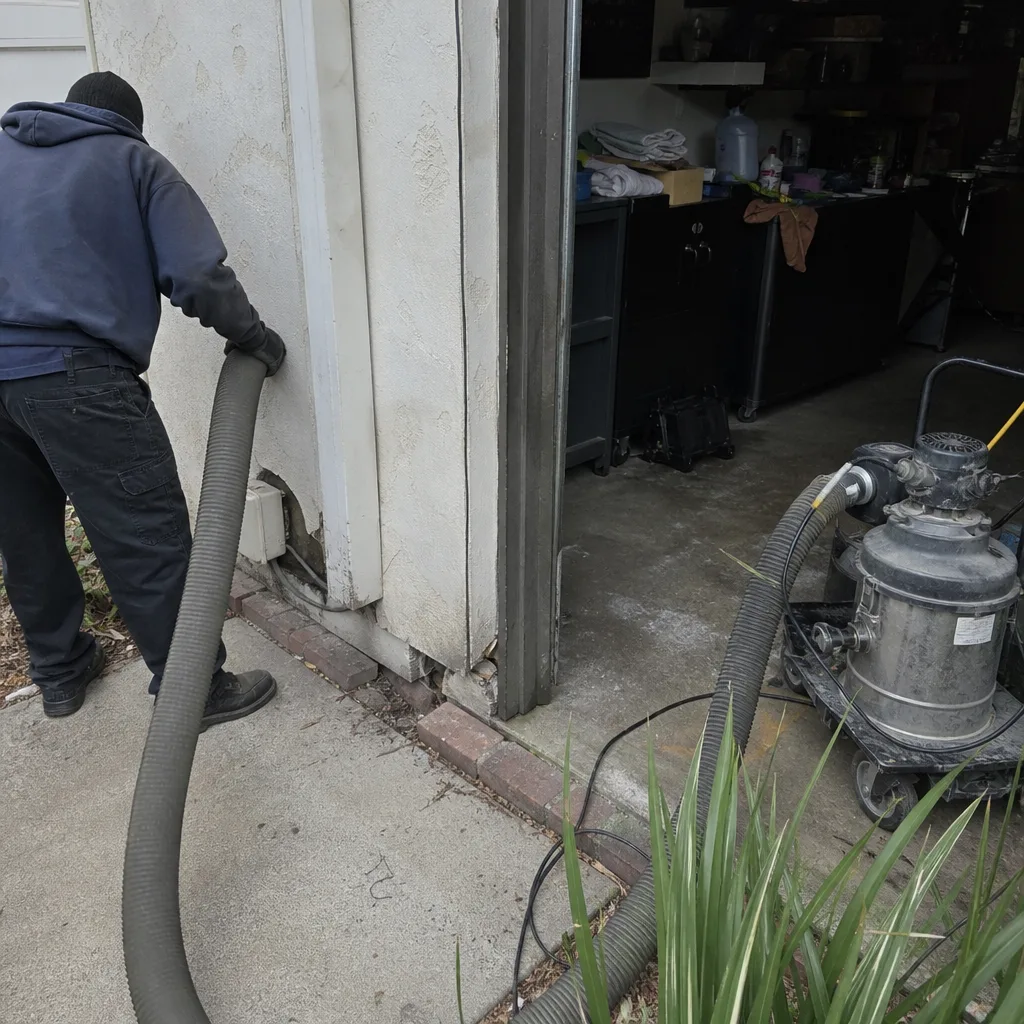 Before
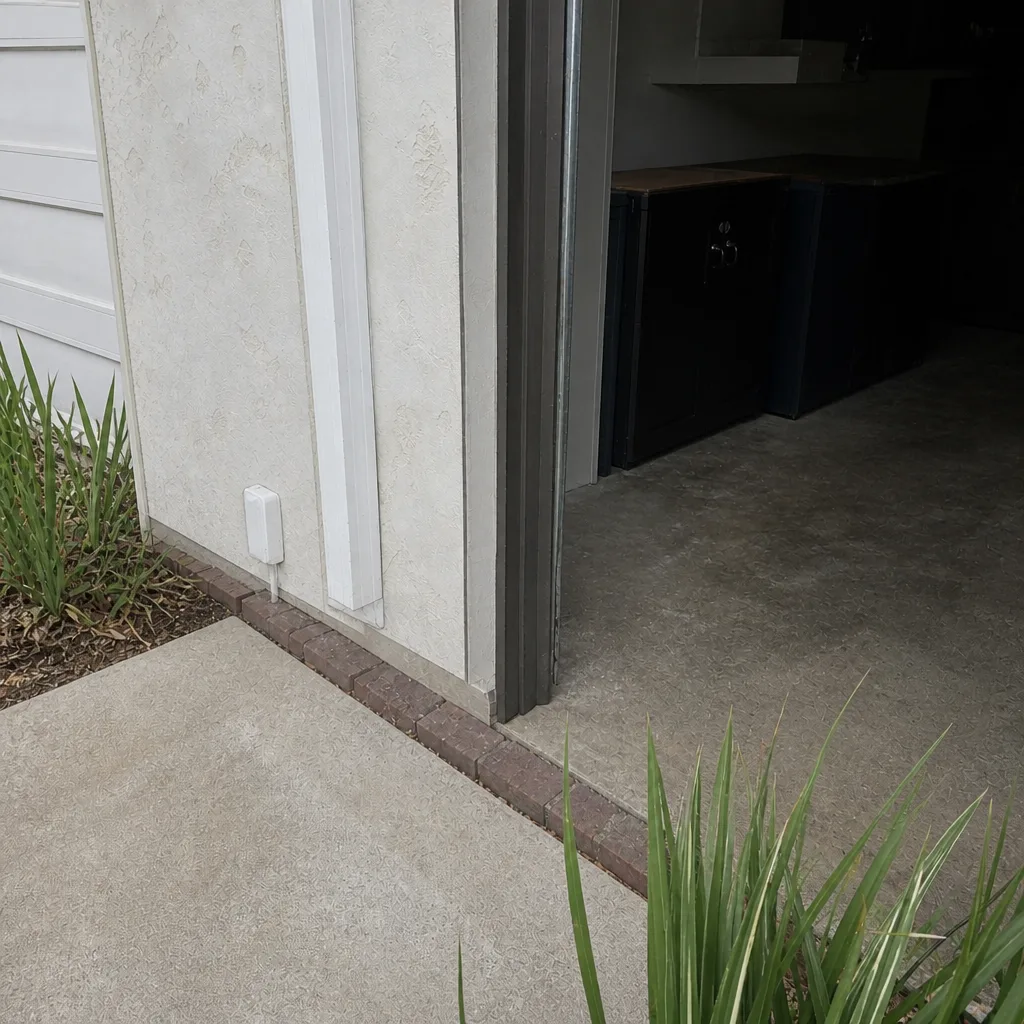 After
When to Call a Professional
Some things you can check yourself. Whether the ducts above your ceiling need full professional cleaning usually can’t be answered without looking inside them. Call a professional when you’ve just finished a renovation and the air still tastes like drywall dust. Call when allergies have gotten worse over months, or when you’ve noticed visible dust coming out of a supply register. Call if the HVAC system has been making noise or the airflow has dropped in a specific room. And call if your dryer is taking longer than it used to, since the dryer vent run is often part of the same story.
For most Huntington Beach homes, a straightforward cleaning is the starting point. Better air is the goal, and the best way to hit that goal is with a company that can handle cleaning, dryer vent cleaning, and duct repair or sealing under one estimate. If you’ve done the checklist above and you’re ready to talk specifics, Air Duct Cleaning Huntington Beach Pros offers free estimates in Huntington Beach. Call (866) 937-8807. We answer 24/7. Fast dispatch from 7am to 7pm, Sunday through Friday.
Frequently Asked Questions
A legitimate quote is itemized, states the number of systems and the length of the duct runs, names the equipment, and lists any add-ons as separate lines. If a quote is a single flat rate with no scope described, it isn’t a quote you can rely on – ask for a written breakdown before you book. Call (866) 937-8807 for a free, itemized estimate.
Professional-grade contact cleaning and HEPA extraction, at minimum. On a routine residential job that usually means a Rotobrush or comparable contact-cleaning system plus a high-capacity HEPA vacuum such as a Nikro unit. For jobs involving heavier contamination, mold, or remediation-adjacent conditions, an Abatement Technologies negative-air unit or equivalent should be part of the setup. Confirm the specific brand and model in advance so you can verify it on arrival.
Duct work tied to your HVAC system falls under California’s C-20 Warm-Air Heating, Ventilating, and Air-Conditioning Contractor license. Ask which license the company operates under and verify it through the state board’s lookup. Confirm insurance as well. A licensed and insured contractor is the standard, and checking takes minutes.
A very low quote usually reflects a much smaller scope than the price implies: fewer vents cleaned, shorter run times, simpler equipment, or add-ons billed once the crew is on site. Professional HEPA extraction is expensive to run, and no company can pay for that equipment and crew time on a price that doesn’t cover them. If a quote is well below the others, ask precisely what gets cleaned and which device does the cleaning. Call (866) 937-8807 to compare a full-scope estimate against the discount offer.
A whole-house cleaning on a typical single-system home commonly takes a few hours of on-site work, sometimes longer if there are multiple zones, heavy contamination, or repair and sealing being done at the same time. The companies you’re vetting should be willing to give you a specific range based on your home’s size and system count. If the answer is “a couple of hours,” ask what’s actually getting cleaned in that window.
Before-and-after photos of your own ducts are the standard. Ask for photos of the same register, plenum, and air handler location taken before and after work. Combine that with a test of system airflow after the job and a written summary of what was cleaned. If a company won’t document its work with photos of your specific system, that’s a reason to book elsewhere. Call (866) 937-8807 to schedule an estimate with before-and-after documentation included.
The Bottom Line
Hiring a duct cleaning contractor isn’t complicated once you know what to ask. Four questions up front (equipment, time, scope, certification) filter out most of the bait-and-switch operations. Itemized quotes instead of flat rates keep you from signing onto unknown scope. A quick walkthrough on arrival confirms the plan holds when the equipment shows up. And the C-20 HVAC license answers a question that matters more than any coupon: who is accountable if something goes wrong. If you’re in Huntington Beach and you’re ready to run through the list with a company that expects the questions, we handle cleaning, sanitizing, duct repair and sealing, HVAC cleaning, and dryer vent service under one estimate. From dirty ducts to clean air – we handle every step.
One flat price per system is agreed before work starts, with before-and-after photos of your own ducts included. That’s the standard we hold to on every Huntington Beach job. For more background on the services behind this guide, see our air duct cleaning page and the main Air Duct Cleaning Huntington Beach Pros homepage.
Call (866) 937-8807 for a free estimate. We answer 24/7. Fast dispatch from 7am to 7pm, Sunday through Friday.
Written by the team at Air Duct Cleaning Huntington Beach Pros.