
Last updated November 24, 2026
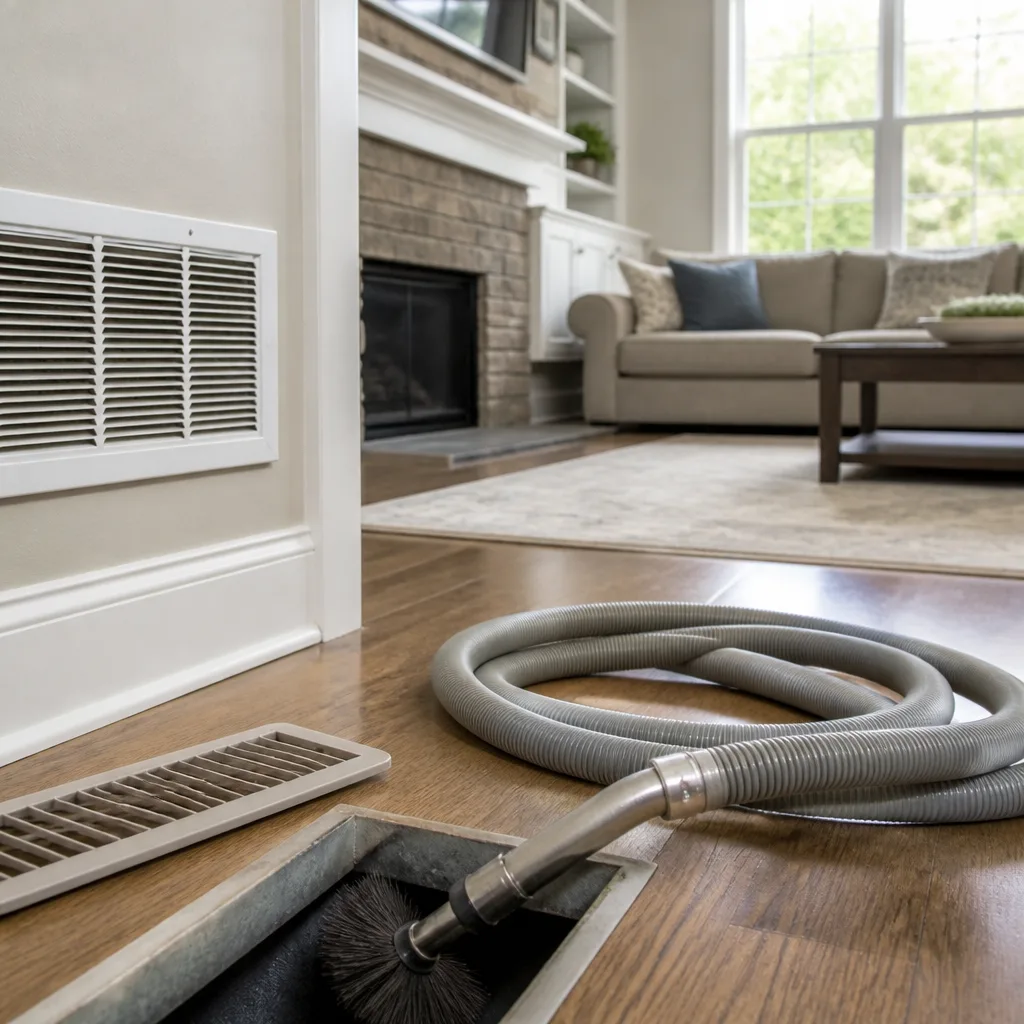 Whole-home duct cleaning
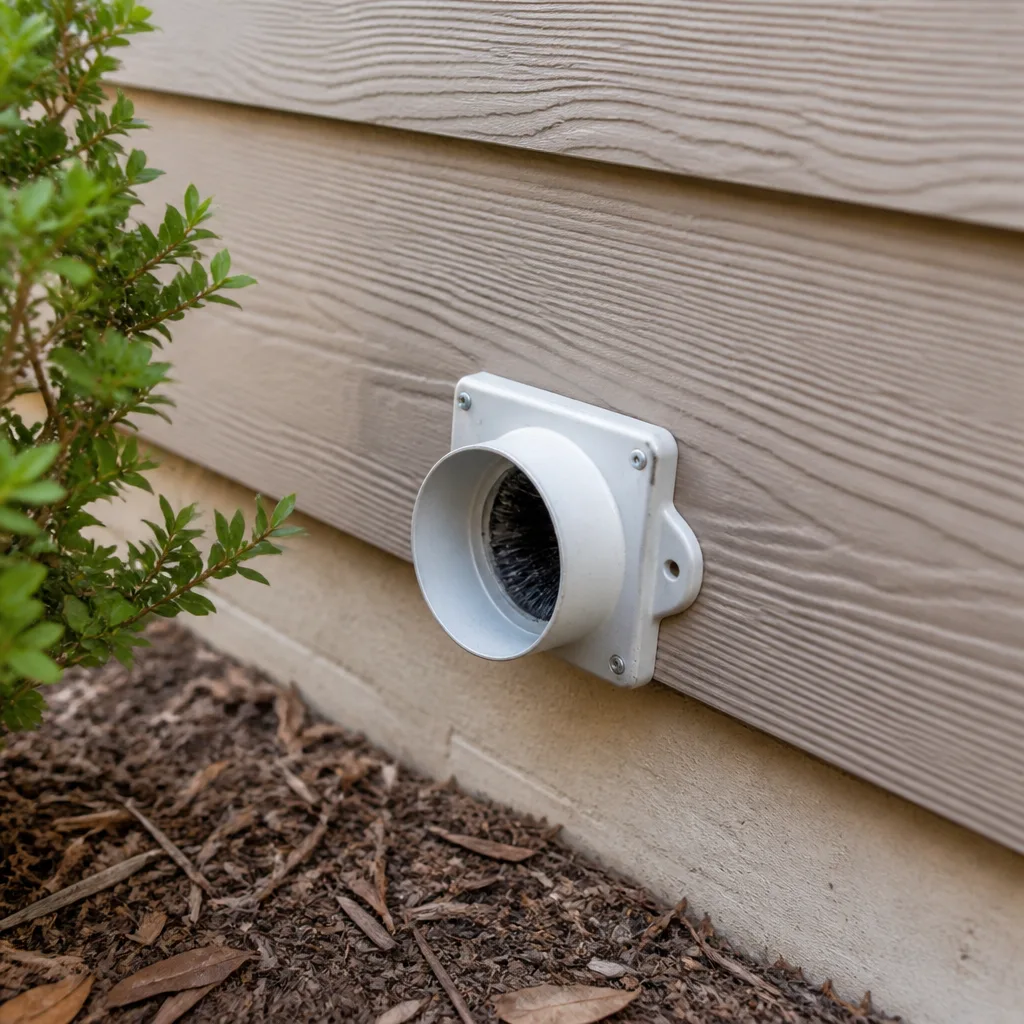 Dryer vent cleaning
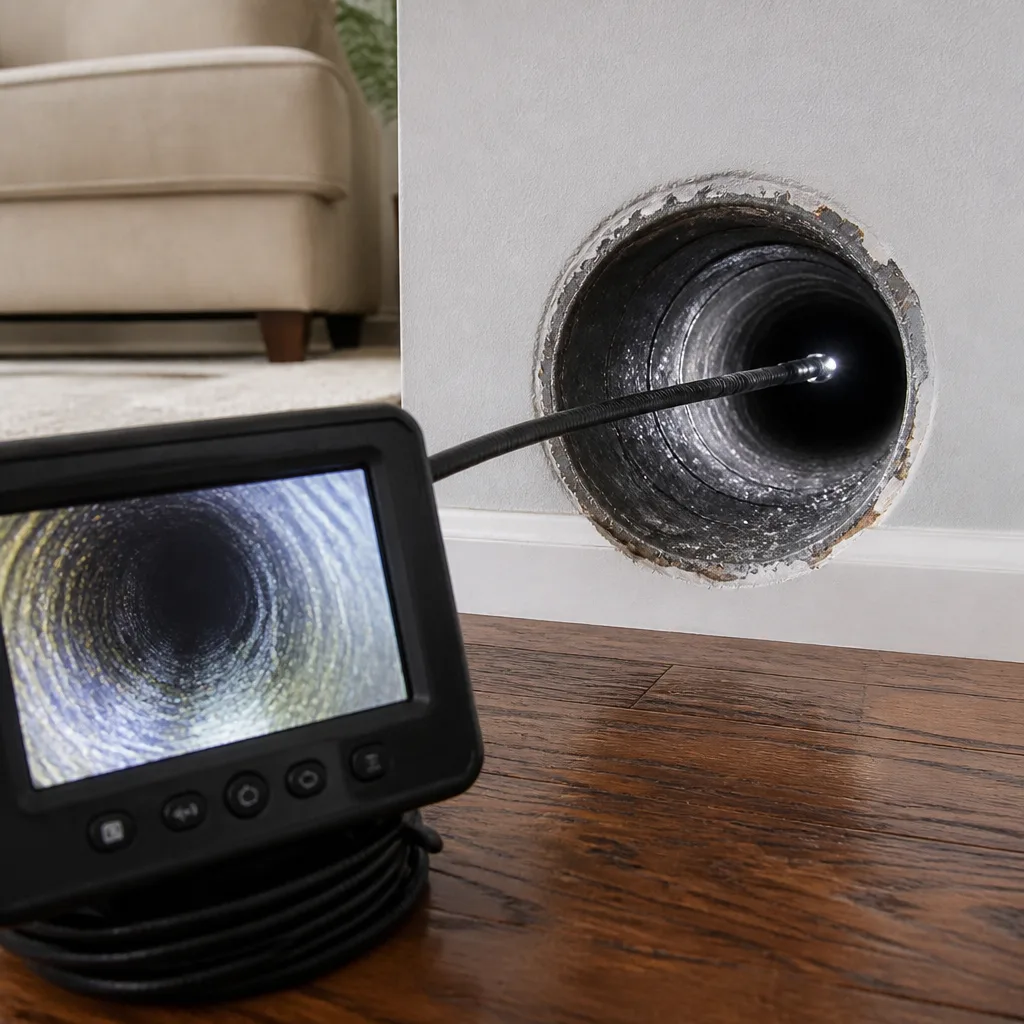 Camera inspection
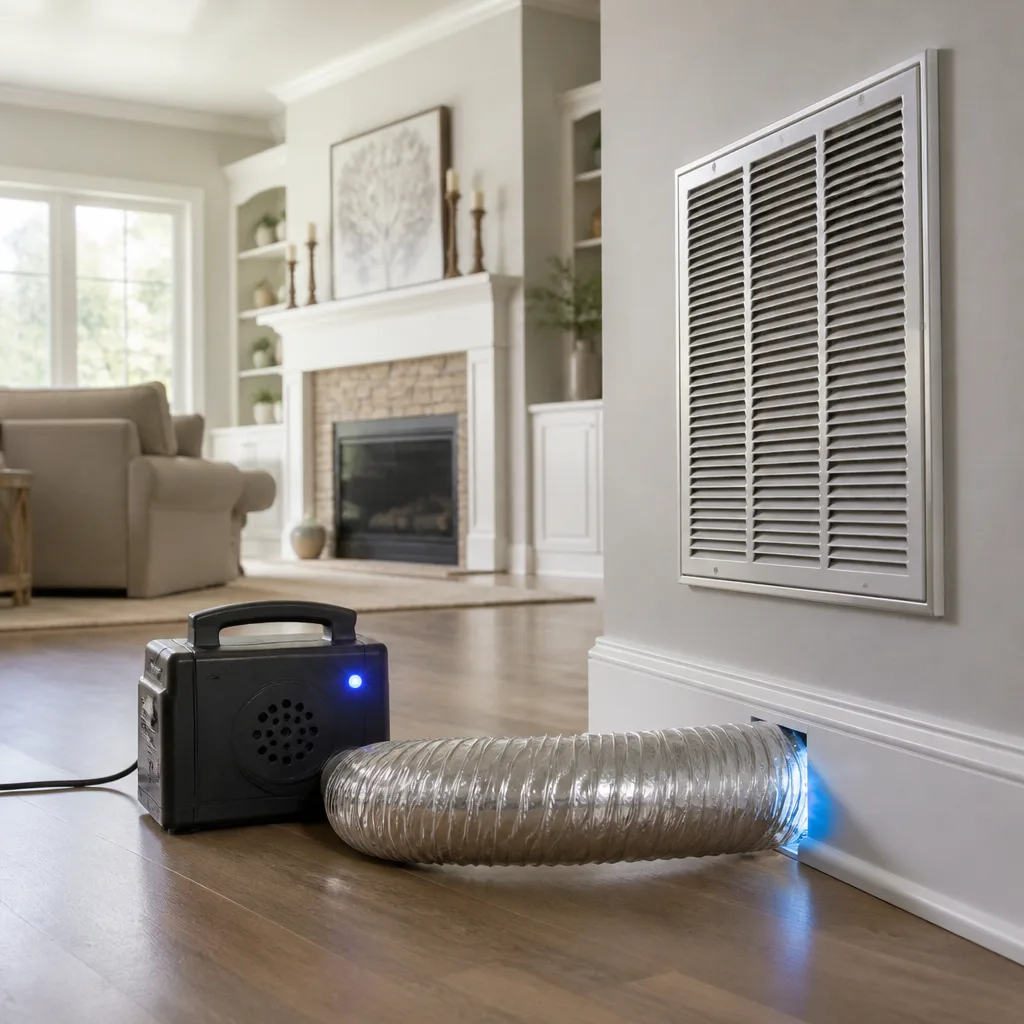 Sanitizing & deodorizing
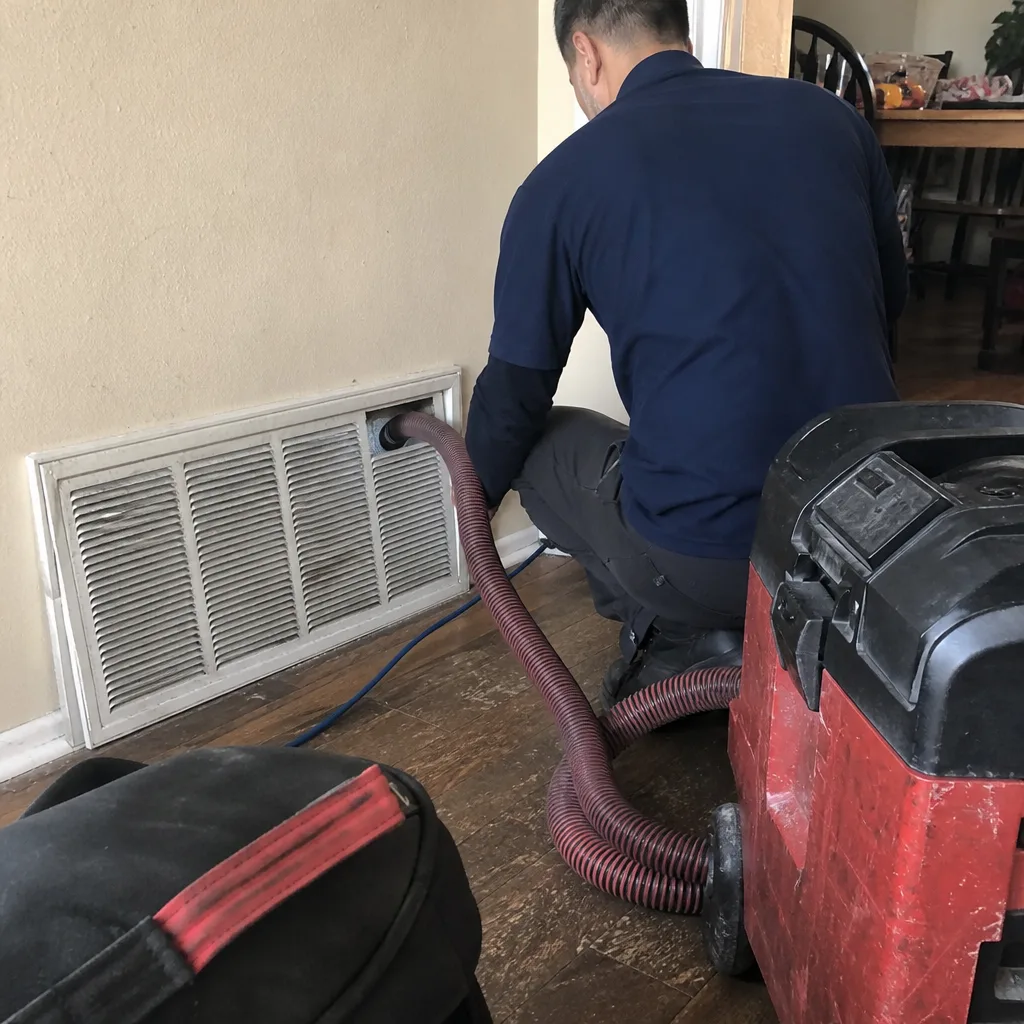
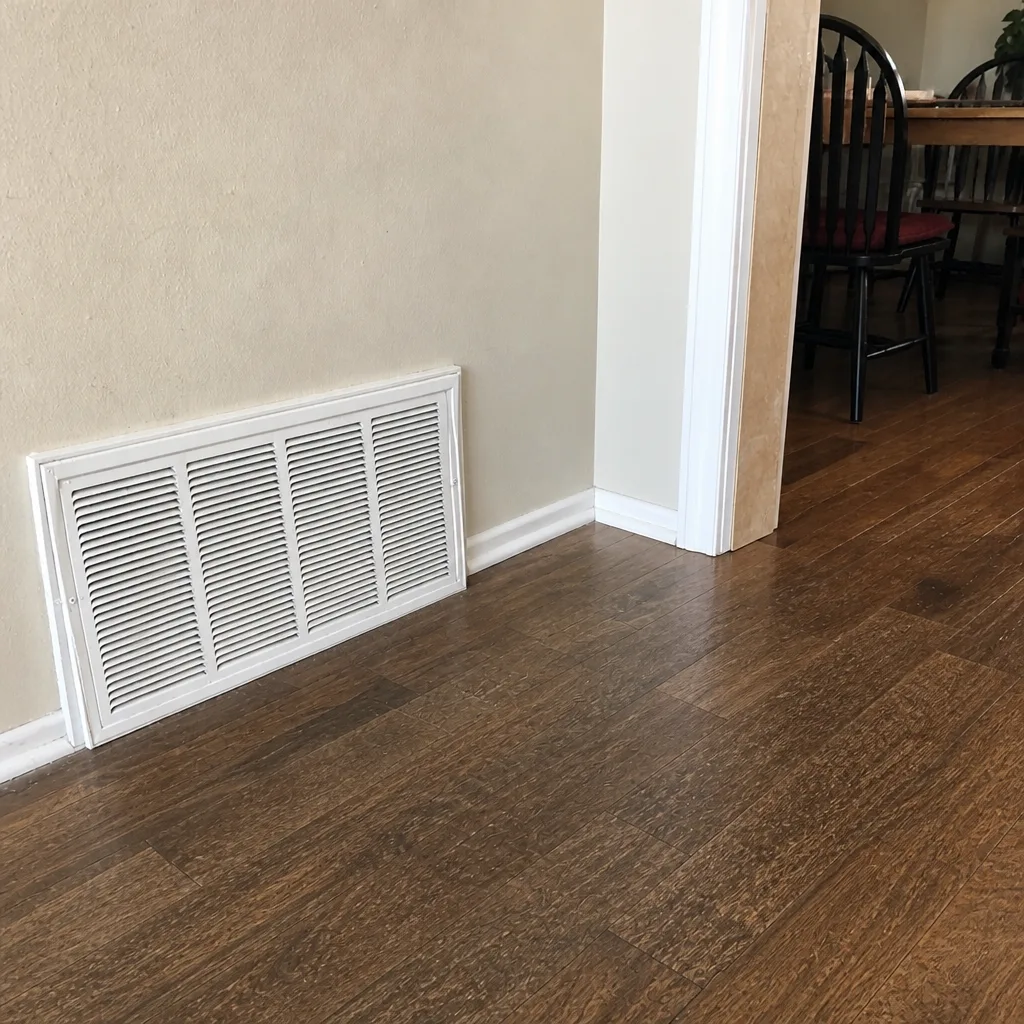
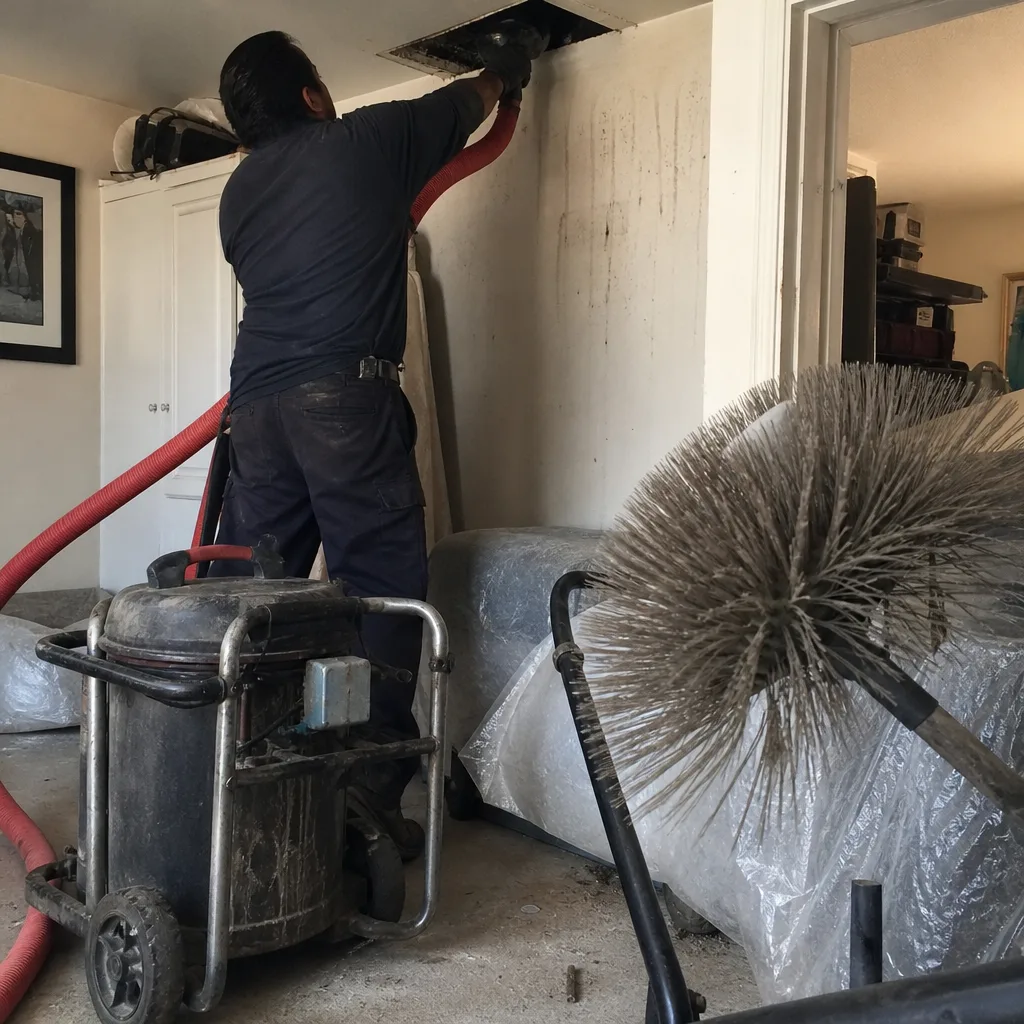
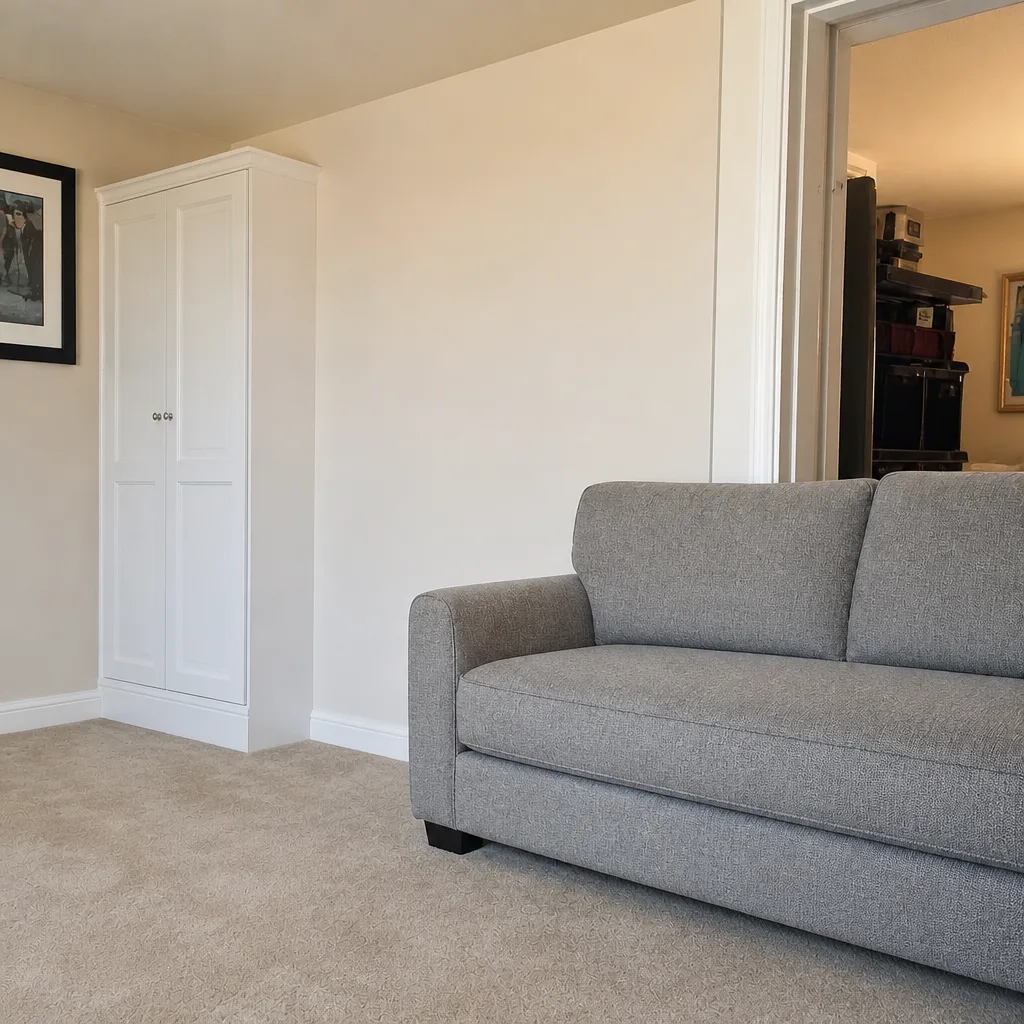
Whole-system duct and dryer vent check with before-and-after photos - you see exactly what came out of your vents
That "$99 whole-house special" is a bait ad - the real number appears once they are in your hallway, or the "clean" is a shop-vac at the register. We photograph the inside of your ducts before and after instead.
The Complete Guide to Air Duct Cleaning in Huntington Beach
Most duct cleaning jobs in Southern California take under an hour. That’s the problem. A properly cleaned system in a 2,000 sq ft home should take two to four hours minimum, because the work isn’t the vacuuming – it’s the setup, the agitation, the extraction, and the verification on both the supply and return sides. If your technician was packed up before lunch, the ducts probably weren’t cleaned; they were dusted at the grilles and called done. This guide walks through what a thorough cleaning actually involves in Huntington Beach: the equipment, the duct types, the documentation, and the red flags that tell you the job was superficial before the invoice lands.
Quick Answer
Air duct cleaning in Huntington Beach is a multi-stage process: negative-air containment, mechanical contact cleaning of every branch line, HEPA extraction, and a documented before-and-after with camera inspection and airflow readings. A whole-home job typically runs several hours, not one, and the price should be one flat rate per system agreed in writing before work starts. Anything less – a shop vac, a coupon, a promise of “sanitizing” without extraction – isn’t cleaning.
Styles & brands we work with
- Whole-home duct cleaning
- Dryer vent cleaning
- Camera inspection
- Sanitizing & deodorizing
Table of Contents
- Why Duct Cleaning in Huntington Beach Isn’t a Generic Service
- What Each Piece of Professional Equipment Actually Does
- Duct Types in Huntington Beach Homes and How Cleaning Differs
- The Step-by-Step Process of a Proper Cleaning
- What Before-and-After Documentation Should Look Like
- Red Flags That the Job Was Superficial
- How Often Ducts Really Need Cleaning
- Beyond Cleaning: Sealing, Repair, and Whole-Home Air Quality
Why Duct Cleaning in Huntington Beach Isn’t a Generic Service
The Huntington Beach housing stock was largely built in the postwar decades through the 1970s and 1980s. That matters because the duct systems installed during those years follow specific patterns: rigid sheet metal trunk lines with flex branch runs in the additions and remodels, or all-flex systems in some of the later tracts. Slab-foundation construction means the return-air path often runs through wall cavities and a central chase, not a basement or crawlspace. When debris accumulates in that return path, it sits in a low, enclosed space that only a proper negative-air setup can pull from.
Then there’s the marine layer. Huntington Beach sits under a coastal marine layer that pushes fine particulate inland most mornings. Those particles are small enough to pass through standard filters and settle inside ductwork over years, accumulating a layer that’s finer and more evenly distributed than the dust you’d find in an inland home with heavier wind-blown soil. Fine accumulation coats the interior surfaces, insulates the duct wall, and becomes the substrate for the odor and mold concerns that lead many homeowners to call in the first place.
What that means practically: a Huntington Beach duct system typically needs more agitation and better filtration extraction than a one-pass vacuum provides. The buildup is fine, distributed, and often invisible from the register. If a contractor prices by the number of vents and brings a single shop vac, they aren’t set up for what this housing stock and climate actually produce inside the duct.
- Slab-foundation homes: return paths run through wall cavities and a central chase.
- Postwar to 1980s tracts: mixed sheet metal and flex systems.
- Marine-layer particulate: fine, distributed accumulation that requires agitation and HEPA extraction.
- Enclosed returns: only reachable with negative-air containment and proper access.
What Each Piece of Professional Equipment Actually Does
The difference between a real cleaning and a cosmetic one comes down to three distinct equipment functions: contact cleaning, extraction, and pressure containment. Most budget operators have one of those at best. A professional air duct cleaning job needs all three working together.
1. Contact cleaning (Rotobrush)
Rotobrush systems use a rotary brush and air whip that physically agitate the interior duct surface, loosening the layer of fine particulate that has bonded to the metal or flex lining. Agitation is the critical step most cheap jobs skip: you can pull all the air you want, but if the debris hasn’t been dislodged from the duct wall, it stays put. Rotobrush is the platform that does the dislodging in every branch line and trunk. It’s the equipment professional contractors across the country rely on because it’s designed specifically for this job, not adapted from something else.
2. HEPA extraction (Nikro)
Once the debris is airborne, it has to be captured – not just moved. Nikro HEPA-filtration vacuums capture fine particulates at the source, preventing recirculation back into the home during cleaning. This matters in Huntington Beach specifically: pulling fine marine-layer accumulation into a lower-grade vacuum just redistributes it through the living space. A HEPA unit captures at the filter, which is what protects the indoor air during the job itself.
3. Pressure containment (Abatement Technologies negative air)
Negative-air equipment maintains the duct system under lower pressure than the room, so the moment we open an access point or register, air flows in – not out. Contaminated air, mold spores, and heavy debris stay inside the system until it passes through filtration. Abatement Technologies equipment is the same class used in remediation-adjacent work; we deploy it for environments with mold, heavy debris, or post-renovation dust where a lighter approach wouldn’t be responsible.
4. Surface protection (Guardsman)
Access work means hoses, brushes, and equipment inside the home. Guardsman surface-protection products safeguard floors, carpet, and thresholds during the process, so the job doesn’t leave a trail behind it.
We match the equipment to the job. A clean, well-maintained recent system may need one configuration; a post-renovation home with construction dust and a decades-old return chase needs another. The point of a multi-system kit is that the answer to “what will this system need?” is discovered on site, not assumed from a coupon price.
Duct Types in Huntington Beach Homes and How Cleaning Differs
Ducts don’t clean the same way across materials. The tract homes and remodels in Huntington Beach generally fall into two camps, and each needs a different approach.
Sheet metal trunk and branch lines
Rigid sheet metal is the more forgiving surface. Contact cleaning with a rotary brush removes accumulated particulate efficiently, and the smooth interior allows verification with a camera. Seams and joints are the places that harbor buildup, so access openings need to be planned to reach the branches, not just the main trunk. Many Huntington Beach homes from the 1950s through the 1970s have this configuration, often with additions that introduced flex.
Flex duct
Flex duct is common in remodels, additions, and later additions to the original system. It’s more delicate: aggressive brush work can damage the inner liner, so contact cleaning here uses the appropriate tool head and gentler agitation. The corrugated interior also traps fine debris more efficiently than smooth metal, which makes HEPA extraction during agitation essential – once debris is loosened, it needs to be captured immediately, or it re-settles. Flex runs that have collapsed, kinked, or torn should be flagged for repair or replacement rather than cleaned.
Return-air chases and wall cavities
Slab-foundation homes often route return air through wall cavities and a central chase. These are enclosed and rarely inspected, which makes them the most likely place for hidden accumulation and the most likely place a superficial job skips entirely. If your quote doesn’t mention the return side, ask. Cleaning the supply without the return is cleaning half the system.
The Step-by-Step Process of a Proper Cleaning
Here’s what an actual whole-home job looks like when it’s done right. If your technician’s process doesn’t have numbered stages like this, ask why.
- Inspection and access planning. We walk the system, identify every branch line, the trunk, the return path, and the register locations. Access openings are planned to reach each run, not just the visible registers.
- Surface protection. Floors and thresholds are covered before any equipment comes inside.
- Negative-air containment setup. Abatement Technologies negative-air equipment goes on the system first, establishing pressure so nothing escapes into the home during cleaning.
- HEPA extraction connection. The Nikro HEPA vacuum connects to the trunk, capturing what gets loosened downstream.
- Contact cleaning of every branch and the trunk. Rotobrush agitation runs through each line; flex runs get the appropriate gentler tool head. This is the slow part, and it should take time.
- Return-side cleaning. Return chases and wall cavities get the same treatment – agitation, extraction, inspection. Skipping this is the most common shortcut.
- Register and grille cleaning. Every supply and return register is removed, cleaned, and reinstalled. A register left dusty is a giveaway.
- Sanitizing (when needed). Air-quality sanitizing is applied to the cleaned interior where conditions call for it – mold, odor, or post-remediation concerns.
- Verification and documentation. Camera inspection of key runs, airflow readings, and before-and-after photos.
That’s a two-to-four-hour job in a typical Huntington Beach home. The time is spent on stages four through seven, which is exactly where a one-hour job cuts corners.
What Before-and-After Documentation Should Look Like
“Trust us, it’s clean” is not documentation. A proper job leaves you with evidence you can look at after the technician is gone.
- Camera inspection. Before and after photos or video from inside the same runs – trunk, branch, and return. You should see the duct interior, not just the register.
- Airflow readings. Measured at registers before and after, showing that the cleaning didn’t collapse or kink any run and that airflow is intact.
- Before-and-after register photos. Visual proof that grilles were actually removed and cleaned, not wiped in place.
- A written summary of findings. Any damaged flex runs, failed seams, or return-path issues flagged during inspection.
In our experience, the homeowner’s real hesitation is the industry’s bait-and-switch reputation: a low coupon figure that becomes a much larger invoice once the technician is inside. The answer is structural, not verbal – one flat price per system agreed before work starts, no per-vent pricing, and before-and-after photos of your own ducts. If a company can’t produce that documentation after the job, the job wasn’t documented. If they can’t commit to a flat price before the job, they aren’t priced honestly.
Red Flags That the Job Was Superficial
A five-minute walkthrough after the job tells you most of what you need to know. These are the signals that the work was cosmetic.
- No negative-air setup. If there was no containment equipment on the system at any point, the “cleaning” simply moved dust around the home.
- Only the supply side was addressed. Ask directly: was the return path cleaned? If the answer is vague, the return wasn’t touched.
- No register removal. Registers that were wiped in place rather than removed and cleaned stay dusty on the inside where it matters.
- No documentation. No camera shots, no airflow readings, no photos – just a verbal “all done.”
- Finished in under an hour. A full job on a typical Huntington Beach home takes longer than that. The physics of agitation and extraction don’t compress.
- Single shop vac on the truck. One piece of equipment cannot perform contact cleaning, HEPA extraction, and pressure containment simultaneously.
- Per-vent pricing or a teaser coupon. Both are set up to change once work begins. Flat pricing per system, agreed in writing, is the only way to compare quotes honestly.
How Often Ducts Really Need Cleaning
There’s no universal schedule. Ducts need cleaning when conditions in the home call for it, not on a calendar. The honest answer is that most Huntington Beach homes don’t need annual cleaning, and a company that pushes a yearly plan without inspecting the system first is selling maintenance, not service.
These are the triggers that actually matter:
- Visible dust or debris blowing from registers after a filter change.
- Recent renovation or remodeling, particularly drywall work or kitchen and bath additions – drywall dust travels deep into branch lines.
- Smoke or odor that lingers in the home even when the HVAC is off.
- Mold inside accessible ductwork, or musty odor when the system runs.
- Allergy symptoms that worsen when the HVAC is running, in a home with a documented history of dust or moisture issues.
- Never having been cleaned since purchase, in a home older than thirty years – the first inspection is the answer, and the cleaning follows from what’s found.
If you don’t fit any of these, have the system inspected before deciding. A proper inspection tells you whether cleaning is warranted, and it’s the honest starting point. Cleaning on a schedule with no evidence behind it is just revenue.
Beyond Cleaning: Sealing, Repair, and Whole-Home Air Quality
Cleaning is a starting point. The conditions that produced the contamination – leaky seams, damaged flex runs, an underperforming filter setup – will refill the system if they aren’t addressed. That’s why the scope needs to go wider than the vacuum.
Duct repair and sealing
Failed seams, kinked flex runs, and collapsed sections are inspected during cleaning and addressed directly. A sealed system holds pressure better, which improves both air quality and HVAC efficiency. We handle repair and sealing as part of the same visit, so you’re not coordinating a second contractor after the cleaning is done.
HVAC system cleaning
The air handler, coil assembly, and blower compartment are part of the same air path as the ducts. Our HVAC cleaning covers that equipment so the whole system is working from clean, not just the duct network downstream of it. This is often the difference between “the ducts are clean” and “the air is clean.”
Whole-home air quality integration
We’re authorized to work with Honeywell and Aprilaire air quality systems, which means the cleaning, the repair, and the long-term filtration strategy can be integrated rather than treated as separate jobs. A quality filtration system set up on a freshly cleaned duct network holds that condition much longer than filtration installed on top of a dirty system. That’s the goal: not just cleaner ducts, but better air over the long run.
Dryer vent cleaning
Dryer vents run through the same house and carry their own fire risk that has nothing to do with the HVAC. Lint accumulation in the vent is a known ignition hazard, and it’s a service purely HVAC-focused contractors often skip or subcontract out. Ours does dryer vent cleaning as part of the same visit, which means one technician, one flat price, and one less contractor to coordinate.
If you’re looking for the broader service context, the main page at air duct cleaning Huntington Beach pros covers what we do across all of it.
Common Mistakes to Avoid
- Booking on price alone. The cheapest quote is usually the one that finishes in under an hour. The real question is what the quote includes, not what it costs – and a flat price per system from a company with the right equipment is the only quote worth comparing against another.
- Not asking about the return side. Cleaning supply branches while skipping the return chases leaves half the contamination in place. In Huntington Beach homes with wall-cavity returns, this is the single most common shortcut.
- Accepting verbal assurances instead of documentation. No camera shots and no airflow readings means no way to verify the work was done. Ask before you book what documentation you’ll receive.
- Skipping the registers. Registers wiped in place stay dusty inside. They should be removed, cleaned, and reinstalled – if a technician never removed them, the job was cosmetic.
- Treating sanitizing as a substitute for cleaning. Sanitizing a dirty duct just coats the debris. Cleaning and extraction come first; sanitizing follows if conditions warrant it.
- Skipping the duct repair conversation. If the inspection finds damaged flex or failed seams, cleaning without addressing them means the contamination returns. This is the service question that separates a cleaning from a solution.
- Ignoring the dryer vent. It’s a separate fire-safety risk that many homeowners never think about. It should be on the same inspection report as the ducts.
See the difference
 Before
 After
 Before
 After
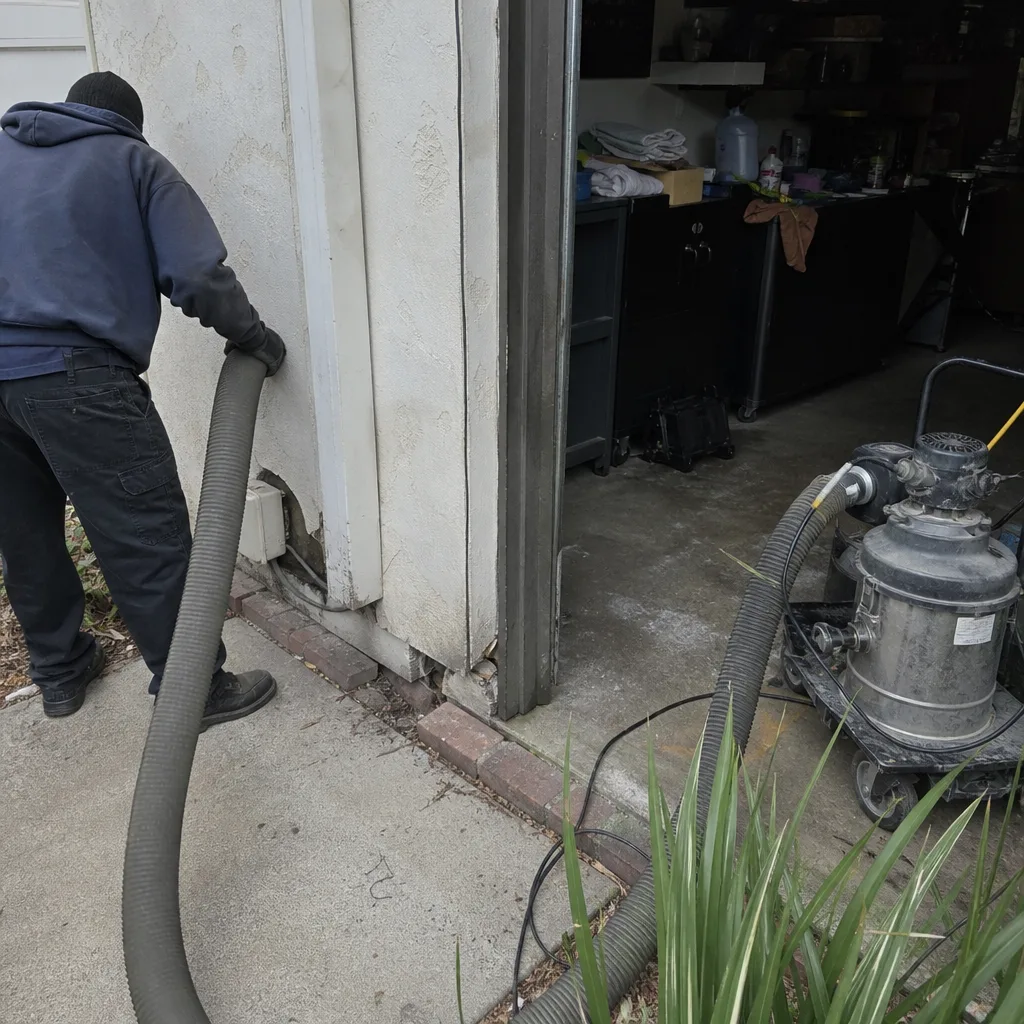 Before
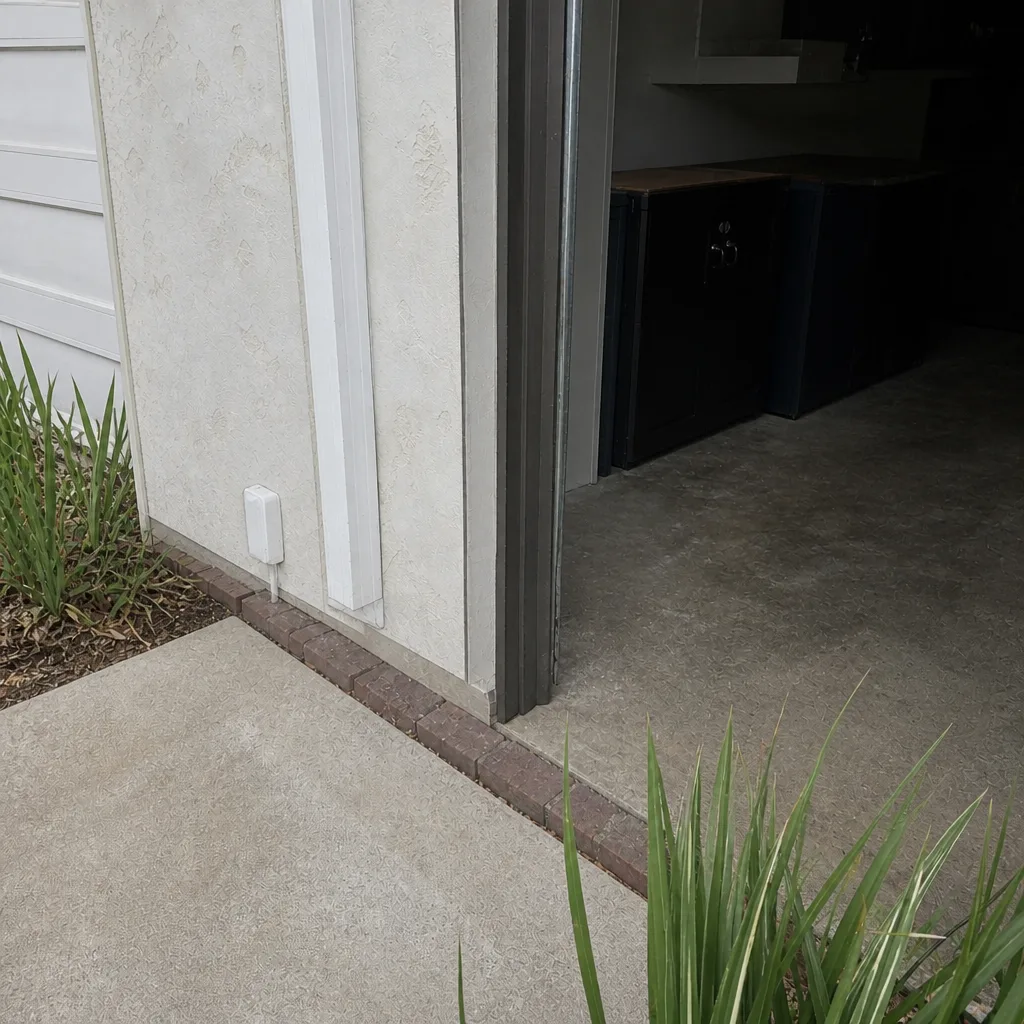 After
When to Call a Professional
Call a professional when you see dust blowing from registers after a filter change, when you’re finishing a renovation, or when a musty odor lingers in the home even with the HVAC off. Call when allergy symptoms track with the HVAC running. Call when the system has never been cleaned and the home is older than thirty years – the first inspection tells you what’s actually there. And call when a previous cleaning finished quickly enough that you’re not sure it happened; a second inspection can tell you what the first one missed.
Air Duct Cleaning Huntington Beach Pros offers free estimates in Huntington Beach, with one flat price per system agreed in writing before work starts. Our technicians have up to 10 years of experience, and we bring Rotobrush, Nikro, and Abatement Technologies equipment to every job because the process matters more than the promise. Call (866) 937-8807 for a free estimate. We answer 24/7. Fast dispatch from 7am to 7pm, Sunday through Friday. A call outside those dispatch hours is booked into the next opening.
Frequently Asked Questions
Cost is per system and set by the written estimate, and the estimate is free. We don’t quote per-vent pricing or a teaser figure, because both are set up to change once work begins. A flat price per system agreed before work starts, with before-and-after photos of your own ducts included, is the way to compare quotes honestly. Call (866) 937-8807 for an exact quote – estimates are free.
Cheaper quotes are usually set up around less equipment and less time: a single vacuum, a supply-side-only pass, registers wiped in place, and no documentation. Those jobs finish in under an hour because they skip the stages that actually remove contamination. The honest comparison is what a quote includes – negative air, HEPA extraction, both supply and return, register removal, and documentation – not what the top-line figure is. Call us for a free estimate and we’ll walk you through exactly what’s in ours.
You know because you can see it: camera inspection before and after, photos of every register, and airflow readings at the registers. We hand over that documentation as part of the job. If a technician finishes quickly and leaves without any visual evidence, the work wasn’t verified – and in most cases it wasn’t done. Call (866) 937-8807 to book an estimate that includes documented results.
Only when conditions in the home call for it. Recent renovation, visible dust from registers, musty odor, mold inside accessible ducts, or a home over thirty years old that’s never been cleaned are the real triggers. Annual cleaning on a fixed schedule without inspecting the system first is a sales plan, not a service need. Call us for an inspection-based estimate before committing to anything.
It affects what accumulates in them. Fine coastal particulate settles into ductwork over years as a distributed layer that standard filters don’t catch, and in Huntington Beach homes that buildup is typically finer and more evenly spread than inland dust. That’s why agitation and HEPA extraction matter more in this housing stock. A free estimate includes a look at the actual system – call (866) 937-8807 to book one.
Yes. Repair and sealing are part of the same visit as the cleaning, along with register work and, where called for, air-quality sanitizing. We’re authorized to work with Honeywell and Aprilaire whole-home systems too, so filtration and long-term setup can be tied to the same job. One flat price per system, one visit, one documented result – call for a free estimate to see what your system actually needs.
The Bottom Line
A thorough cleaning in Huntington Beach comes down to process: negative-air containment, contact agitation of every branch and the trunk, HEPA extraction, return-side cleaning, register removal, and documented verification with camera shots and airflow readings. It takes hours, not minutes, and it should be priced one flat rate per system, agreed in writing, before work starts. Any quote that skips any of those stages is a quote for a different service. The equipment matters because the work is physical, and the documentation matters because you should be able to verify the work without taking anyone’s word for it. That’s the whole standard.
Frequently Asked Questions About Scheduling
We answer 24/7. A call outside dispatch hours is booked into the next opening, Sunday through Friday, 7am to 7pm. We don’t run Saturday dispatch; if a call comes in on Saturday, we book it into Sunday. An estimate is free, and the price is set per system in writing before any work begins.
Same-day scheduling is available when the day’s route allows. The cleaning itself takes the time it takes – properly cleaning a full system in a 2,000 sq ft home is a two-to-four-hour job, and the schedule reflects that. Call (866) 937-8807 to see what’s open.
If you’re ready to see what’s actually inside your duct system, call (866) 937-8807 for a free estimate. We answer 24/7. Fast dispatch from 7am to 7pm, Sunday through Friday. We bring the equipment, do the full job, and hand you the documentation. One flat price per system, agreed before work starts.
Written by the team at Air Duct Cleaning Huntington Beach Pros.