
Last updated November 24, 2026
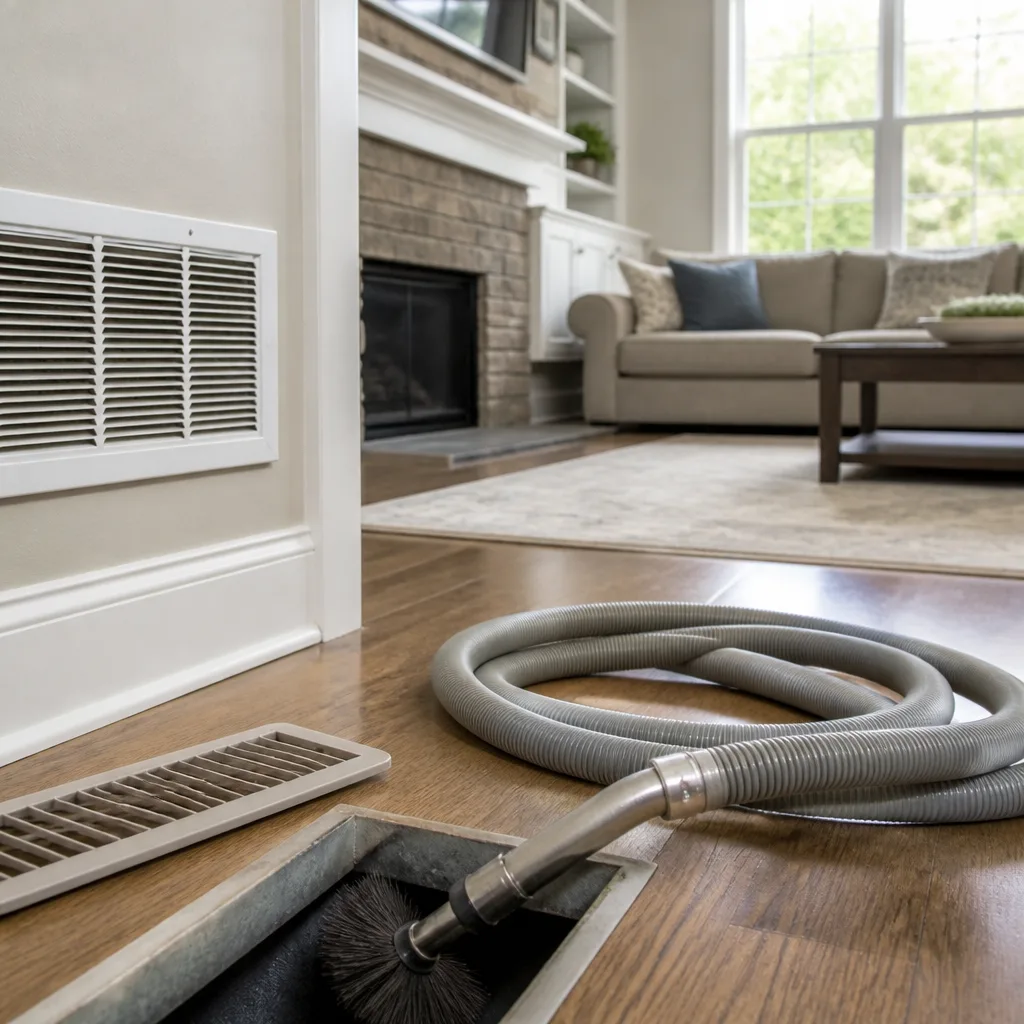 Whole-home duct cleaning
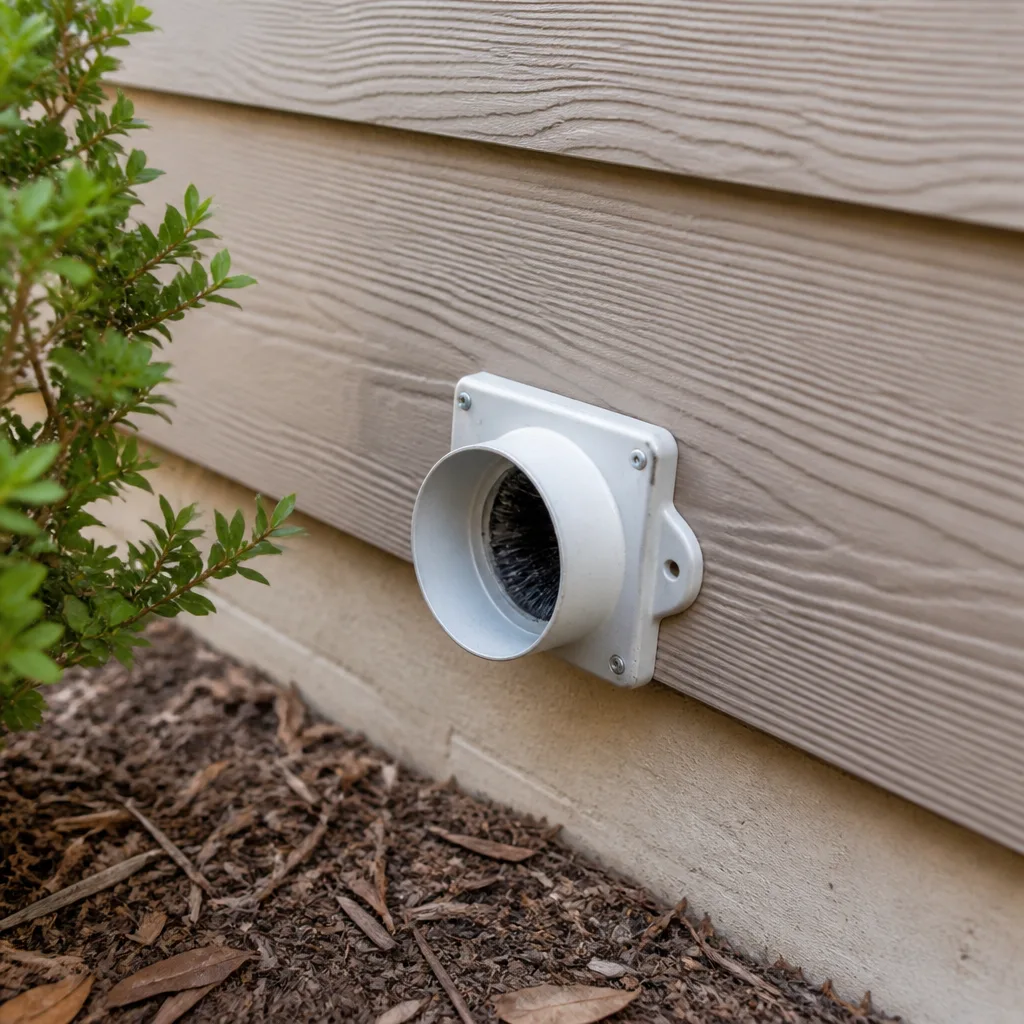 Dryer vent cleaning
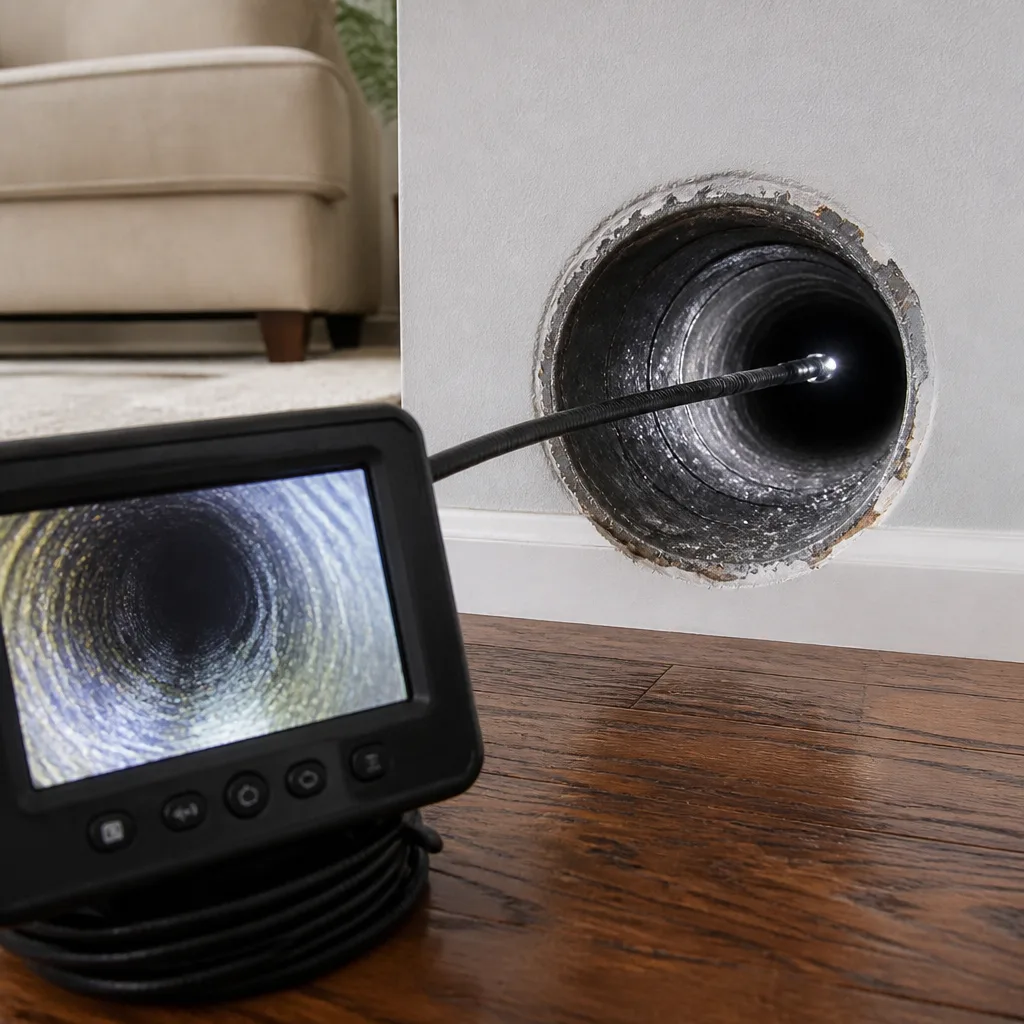 Camera inspection
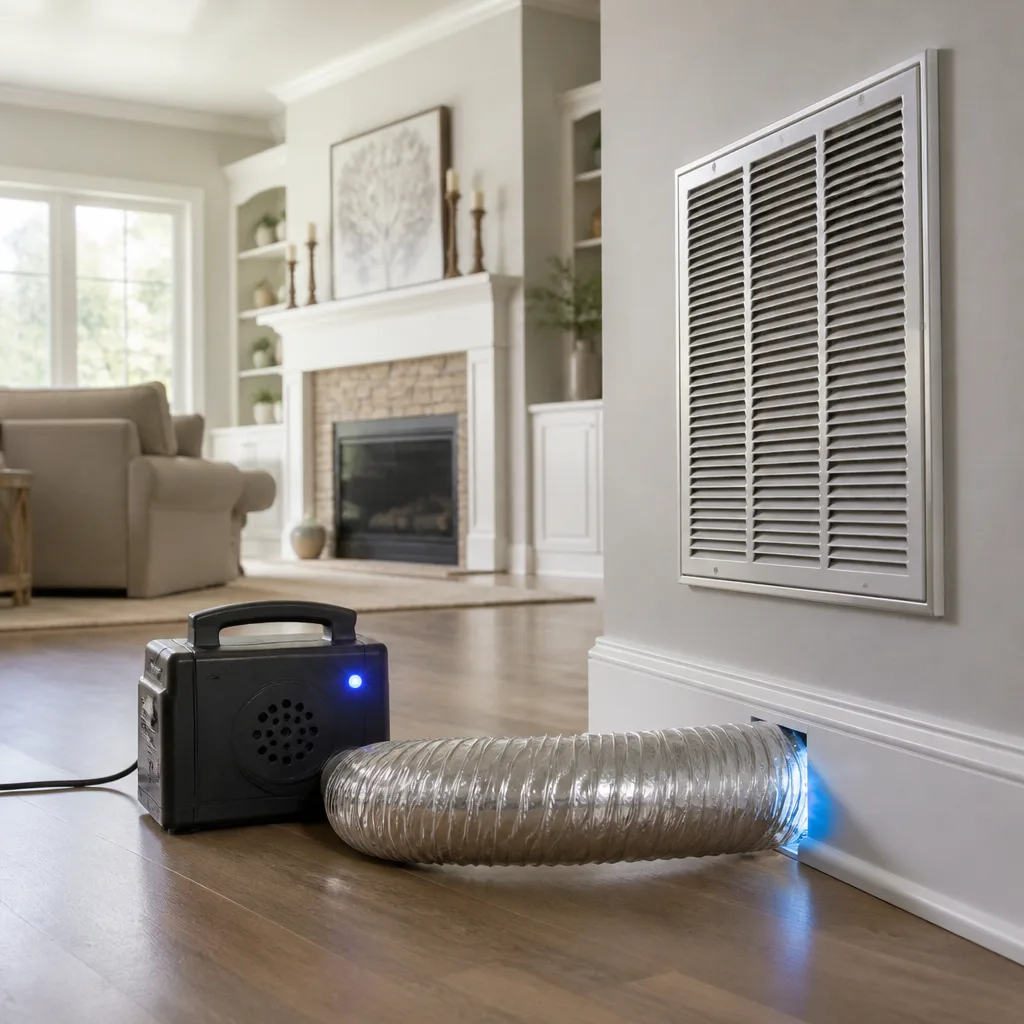 Sanitizing & deodorizing
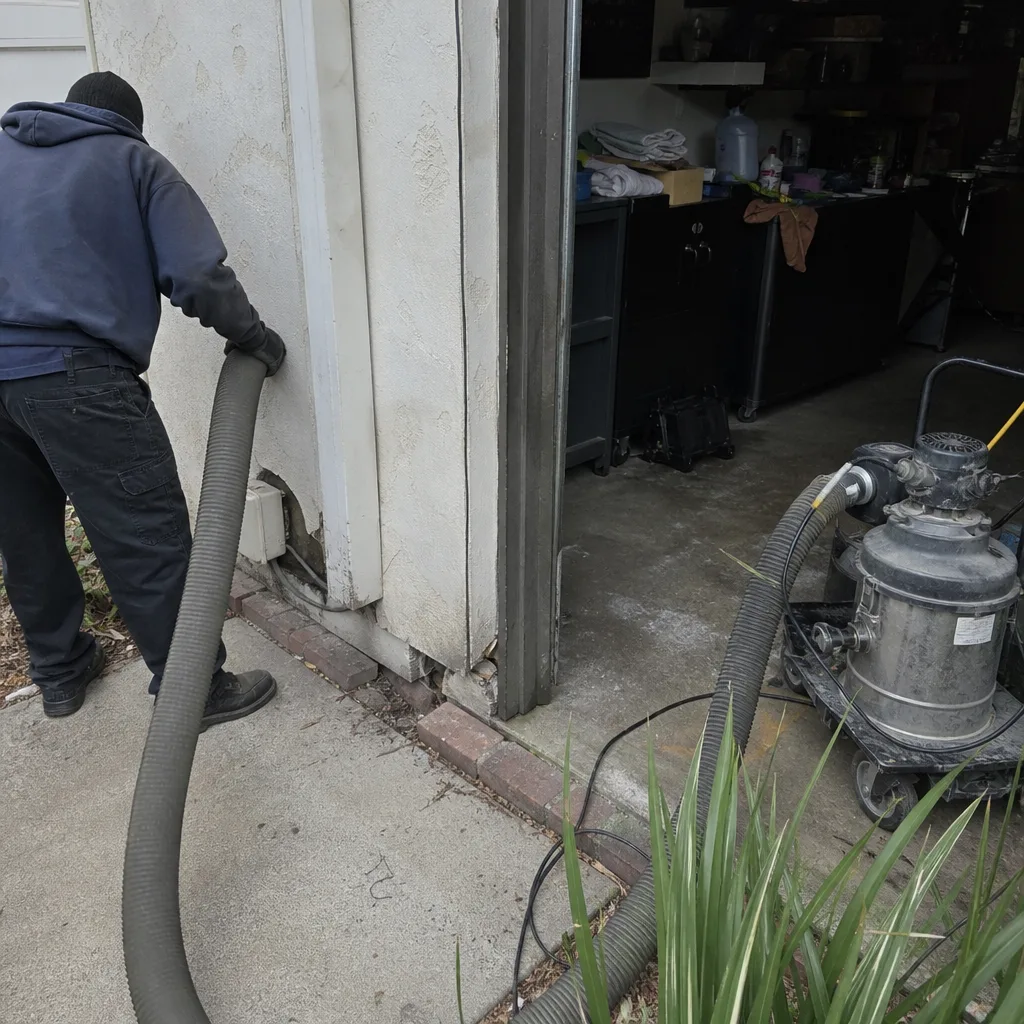
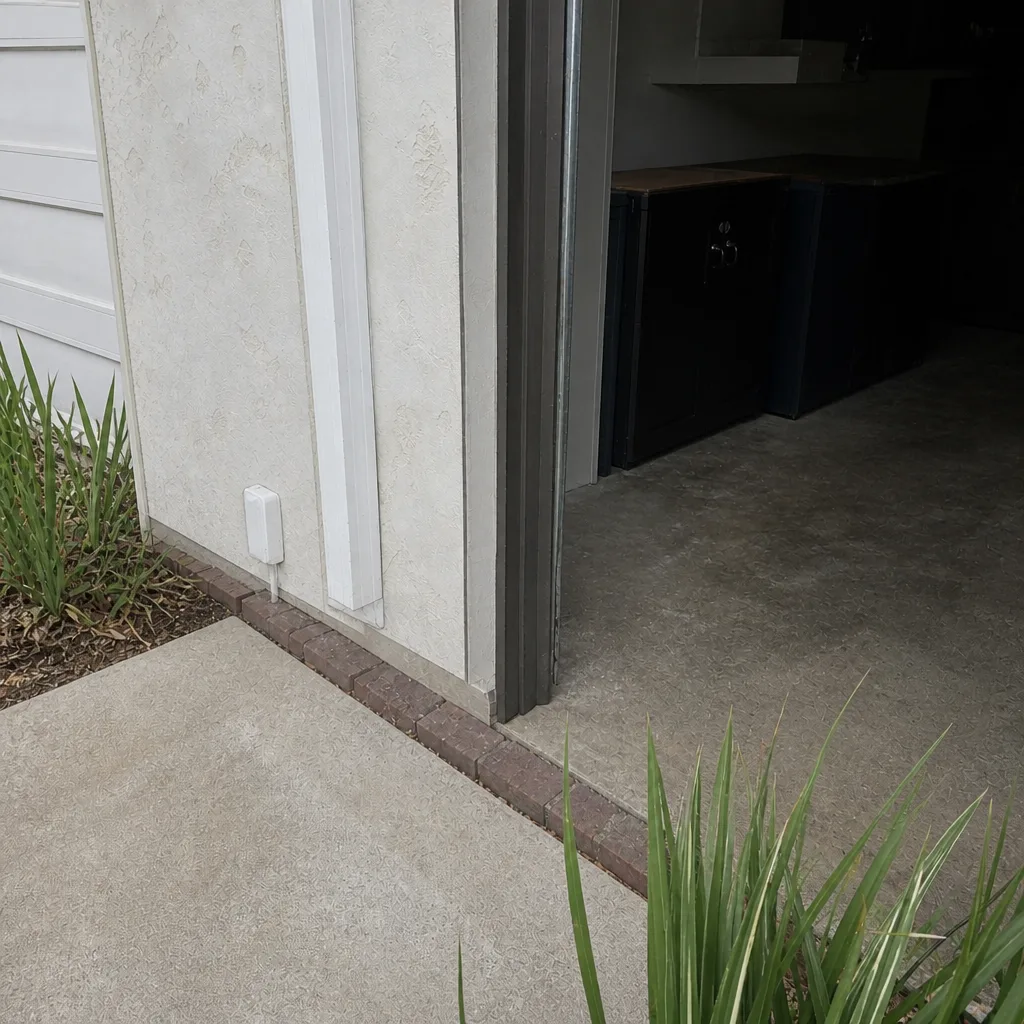
Whole-system duct and dryer vent check with before-and-after photos - you see exactly what came out of your vents
That "$99 whole-house special" is a bait ad - the real number appears once they are in your hallway, or the "clean" is a shop-vac at the register. We photograph the inside of your ducts before and after instead.
Air Duct Cleaning Warning Signs: A Huntington Beach Homeowner’s Reference Guide
When one room in your Huntington Beach home runs a few degrees warmer than the rest, most people reach for the thermostat or call an HVAC technician to check refrigerant levels. In our experience, that’s often the wrong first move. In homes with long runs of flex duct, uneven temperatures usually trace back to a collapsed, kinked, or disconnected duct run, not a failing compressor. That’s a duct inspection problem, not a mechanical one, and no amount of refrigerant will fix it. The symptoms your home gives off every day are diagnostic data. This guide teaches you to read them: temperature patterns, smells, register staining, and the timing of your allergy symptoms. By the end, you’ll know when a duct issue is likely, and when to bring in professional equipment.
Quick Answer
The main warning signs of dirty or damaged air ducts are uneven room temperatures, musty or dusty smells that appear when the system runs, visible dust halos or dark streaking around supply registers, allergy symptoms that flare only when the HVAC kicks on, and a fresh wave of dust in the weeks after a renovation. Any two of these together usually justify a professional inspection. A single symptom is a reason to look closer, not a reason to panic.
Styles & brands we work with
- Whole-home duct cleaning
- Dryer vent cleaning
- Camera inspection
- Sanitizing & deodorizing
Table of Contents
- Room Temperature Imbalance as a Duct Diagnostic
- Smell Differentiation Guide: What Each Odor Tells You
- Reading Register Discoloration Patterns
- Allergy and Respiratory Symptom Timing
- The Post-Renovation Warning Window
- Dust Recurrence and Weak Airflow
- When to Call a Professional
- Frequently Asked Questions
Room Temperature Imbalance as a Duct Diagnostic
Temperature imbalance is the single most misread duct symptom we encounter. A room that’s consistently 3 to 8 degrees off from the rest of the house is telling you something specific, and the pattern of the imbalance narrows down the cause. What matters is whether the problem room is far from the air handler, whether it’s an addition, and whether the temperature gap stays the same summer and winter. In Huntington Beach homes with long attic flex duct runs, kinked or disconnected supply ducts are the most common culprit.
Three patterns point to three different problems:
- Weak airflow plus a temperature gap: this usually means a blocked or disconnected supply run. Air simply isn’t reaching the room, so the room drifts toward the temperature of the walls around it.
- One room consistently warm while others are fine: often a collapsed section of flex duct. Flex duct that gets pinched in a tight attic can lose most of its flow even when the run is technically still connected.
- Whole-house imbalance, with rooms nearest the unit coolest: typically a return-air problem or an undersized return. The system can move the air but can’t pull it back evenly, so distant rooms starve.
Here’s the diagnostic test you can run without tools. In Huntington Beach, on an afternoon when the marine layer has burned off and the house is warm, hold a tissue or a strip of light paper against each supply register for a few seconds. Compare the pull across rooms. A register with noticeably weaker flow is your problem zone. Note whether that register is at the far end of the house from the air handler. That pattern, alone, is worth the price of a professional inspection because it tells the technician exactly where to look first.
What this is not: it’s rarely a refrigerant issue. A system low on refrigerant cools poorly everywhere, not in one room. If your HVAC tech has already checked the charge and found it normal, the problem lives in the delivery system. That’s where proper air duct cleaning and a careful inspection come in.
Smell Differentiation Guide: What Each Odor Tells You
Your nose is a diagnostic tool, but only if you classify the smell correctly. Homeowners tend to lump every unpleasant duct odor into “musty,” which sends them down the wrong path. The type of smell points to a different root cause, and each cause calls for a different response. Here’s how we separate them.
- Musty or earth-damp smell: this signals organic growth, likely in ducts where condensation collects or where a duct run passes through a damp crawl space or unconditioned attic. In Huntington Beach, where humidity is usually mild but duct condensation can still happen, this often appears in ducts near the coast-facing walls of a home.
- Burning or charred smell: never a duct-cleaning issue on its own. This suggests an HVAC component overheating (often the blower motor or wired connections). Shut the system down and call an HVAC technician. Do not run the system to “clear it out.”
- Chemical or solvent smell: usually residual VOC off-gassing from new flooring, paint, or cabinets that’s being pulled into the return. Off-gassing fades on its own, but heavy contamination from renovation dust often lingers in the ducts after the smell is gone.
- Dirty-sock syndrome: a stale, gym-bag smell that appears when the AC first starts and fades once it runs. It typically comes from microbial growth on the evaporator coil or in the drain pan, not the ducts themselves. Cleaning the ducts without addressing the coil won’t fix it.
Two quick checks help you narrow it down. First, note whether the smell is strongest in a specific room or throughout the house. A room-specific smell points to a localized duct problem; house-wide suggests the coil, air handler, or return. Second, notice whether the smell appears only at startup or persists the whole cycle. Startup-only points to equipment; constant points to the ducts. If the smell is musty and localized, a professional inspection confirms whether remediation-level cleaning is needed, which calls for equipment like Abatement Technologies negative-air systems rather than a standard cleaning setup.
Reading Register Discoloration Patterns
Supply and return registers collect evidence over time, and the pattern of staining tells you what kind of contamination you’re dealing with. Pull the cover off a few registers and look closely. The color and shape of what you find is real information.
- Gray dust halos around the register face: the classic sign of airborne dust being pushed out and settling on the grille and surrounding wall. This usually means the supply ducts are carrying fine particulate, which builds up over time. Gray halos are the most common sign we see in Huntington Beach homes that haven’t had duct attention in many years.
- Black streaking: darker, thin streaks radiating from the vanes or slots. This pattern often points to microbial growth carried on the airflow, or to soot from a nearby source. In homes near heavy road dust or with older HVAC equipment, this can also come from blower-side contamination.
- Rust staining or orange-brown tint: usually condensation issue. Wet ducts rust the metal boots and register boxes, which can indicate a leak in the duct run or poor insulation in an unconditioned space. Rust staining is worth a professional look because it can signal both a moisture problem and compromised duct integrity.
- Uniform darkening with no defined pattern: the least alarming. This is generally surface dust that hasn’t been disturbed in years. It’s a cleaning reminder, not an emergency.
The register on the longest run of ductwork is the most telling one. In Huntington Beach homes where the air handler sits in the garage or attic and the bedroom wing sits at the far end, the farthest register often shows the heaviest buildup. That’s normal physics, not a crisis, but it’s a signal that the whole system probably needs an inspection. Ongoing buildup also penalizes HVAC cleaning, since the blower and coil work harder when the ducts are restricted.
Allergy and Respiratory Symptom Timing
The timing of symptoms is the most underused diagnostic clue in the home. Ambient air quality problems and duct problems can produce similar symptoms (sneezing, itchy eyes, congestion, throat irritation), but they differ in when those symptoms hit. That difference is the key.
Here’s the pattern that points to the ducts specifically:
- Symptoms appear 15 to 30 minutes after the HVAC turns on. As the blower moves air through the ducts, it pushes particulate out through the registers. If symptoms start roughly when the system runs, the ducts are the likeliest source.
- Symptoms fade when the system is off for a few hours. That’s the opposite of outdoor allergy season, which follows day-to-day weather and pollen counts, not your thermostat cycles.
- Symptoms are worse in one room or one part of the house. That localized pattern points to a problem duct run, not a whole-home air quality issue.
- Symptoms spike the day after the system has run continuously for the first time in weeks. This is common when a household switches from heating to cooling for the season, or when an HVAC system is run for an extended stretch after a long idle period.
What complicates this in Huntington Beach: a fair number of residents have year-round mild allergies, so the baseline is already elevated. The misattribution happens when a homeowner blames ambient air when their ductwork is the actual source. A simple test: write down the date and time of the symptoms for two weeks alongside when the HVAC ran. If they correlate, the ducts deserve a look. Our technicians have up to 10 years of experience reading these patterns, and it’s rarely the air outside that’s the culprit when symptoms align with the system.
The Post-Renovation Warning Window
Renovations are the biggest single cause of duct contamination we encounter. The problem is that the symptoms usually appear well after the contractors have packed up and left. In our experience, that window runs roughly 60 days after construction ends. Within those first two months, dust, drywall particulate, and construction debris that settled inside the ducts during the project start moving through the house as the system runs.
What to watch for in that 60-day window:
- A visible fine-dust film on furniture that appears faster than it did before the renovation. This is the most common sign, and it’s usually the one homeowners notice first.
- A musty or chalky smell that wasn’t there before. Drywall dust smells chalky; sawdust has its own distinct tint. If you smell either after construction, the ducts have probably collected it.
- A new cluster of allergy symptoms in one or more household members who weren’t affected before. This can happen when the concentrated dust in the ducts is finally moved through the house.
- Compromised duct runs visible during the renovation. If you saw ductwork pulled or moved as part of the project, that run is worth inspecting. Flex duct that was disconnected and never reattached is the classic post-renovation mechanical failure in Huntington Beach homes.
Renovation dust isn’t the only source. Anything that generates fine particulate tends to end up in the ducts: sanding, cutting, plaster repair, even heavy attic work. Post-renovation cleaning is worth scheduling after the project wraps, not before, because the ducts will collect dust throughout the entire build. It’s much more efficient than cleaning mid-project and cleaning again. If you’re planning a major renovation, the process below is the smartest sequence:
- Before demolition, note the location of every supply and return register so nothing gets taped over accidentally.
- During the project, ask your contractors to shut the HVAC off when they’re generating heavy dust, and to seal returns with plastic if possible.
- After construction ends, give the dust a few days to settle.
- Schedule a professional inspection and cleaning of the duct system.
- If the renovation touched any of the ductwork itself, have the technician inspect for disconnections and overall integrity before running the system at full time again.
Dust Recurrence and Weak Airflow
Rapid dust recurrence is the sneaky one. Every home has some dust, but if you find yourself dusting the same furniture more frequently than you used to, the furniture isn’t the problem. The ducts are shipping more particulate into the living space. A filter change is the first step. If you’ve replaced the HVAC filter recently and the dust is still coming back faster than it should, the system is moving dust through the ducts faster than the filter can catch it. Professional cleaning with equipment like a Nikro HEPA vacuum, which captures fine particulates at the source, is the right response.
Weak airflow is the other half of the picture, and it’s easy to misread. A register that has weak airflow can mean one of several things: the damper is closed, ductwork has collapsed, the filter is loaded, or returns are undersized. In Huntington Beach homes built in the peak years of fast construction, undersized returns are common and often go unnoticed until an HVAC tech or duct cleaner takes a careful look.
Here’s how to sort through weak airflow without guessing:
- Check the filter first. A loaded filter will choke every register in the house, not just one.
- Check that the visible damper at each register (if there is one) is fully open. Many registers have a small lever set into the grille.
- Compare the pull at every room. If every register is weak, suspect the filter, the blower, or the return. If one room’s register is weak and the others are strong, suspect that room’s duct run.
- If a room’s airflow changed suddenly (not gradually over months), suspect a collapsed duct or a disconnected run. Sudden changes are more likely sudden mechanical failures.
Airflow problems that turn out to be duct-related are worth fixing carefully, because air duct cleaning Huntington Beach pros who check airflow and then leave without inspecting duct integrity only treat half the problem. The right scope includes both cleaning and a mechanical look at the ducts themselves.
When to Call a Professional
Some duct situations are best handled at home with a filter change and a vacuum. These aren’t among them.
Call a professional when any two warning signs line up in the same house: temperature imbalance plus a smell, register staining plus dust recurrence, allergy symptoms timed to the system plus one specific room that’s consistently off. Call immediately if the smell is burning or charred (that’s an HVAC emergency, not a duct problem). Call before running the system if you smell chemical or musty odors so you can rule out growth before air moves through the house.
Bring in a professional after any renovation that disturbed the ductwork itself, or any renovation that pulled down ceilings or opened walls in rooms with supply registers. Bring in a professional if the ducts were cleaned but symptoms didn’t improve. Bring in a professional if you’re a new homeowner and have no record of prior duct service. Air Duct Cleaning Huntington Beach Pros offers free estimates in Huntington Beach. Call (866) 937-8807. We answer 24/7. Fast dispatch from 7am to 7pm, Sunday through Friday. The written estimate sets the price, one flat price per system, and it’s agreed before work starts.
See the difference
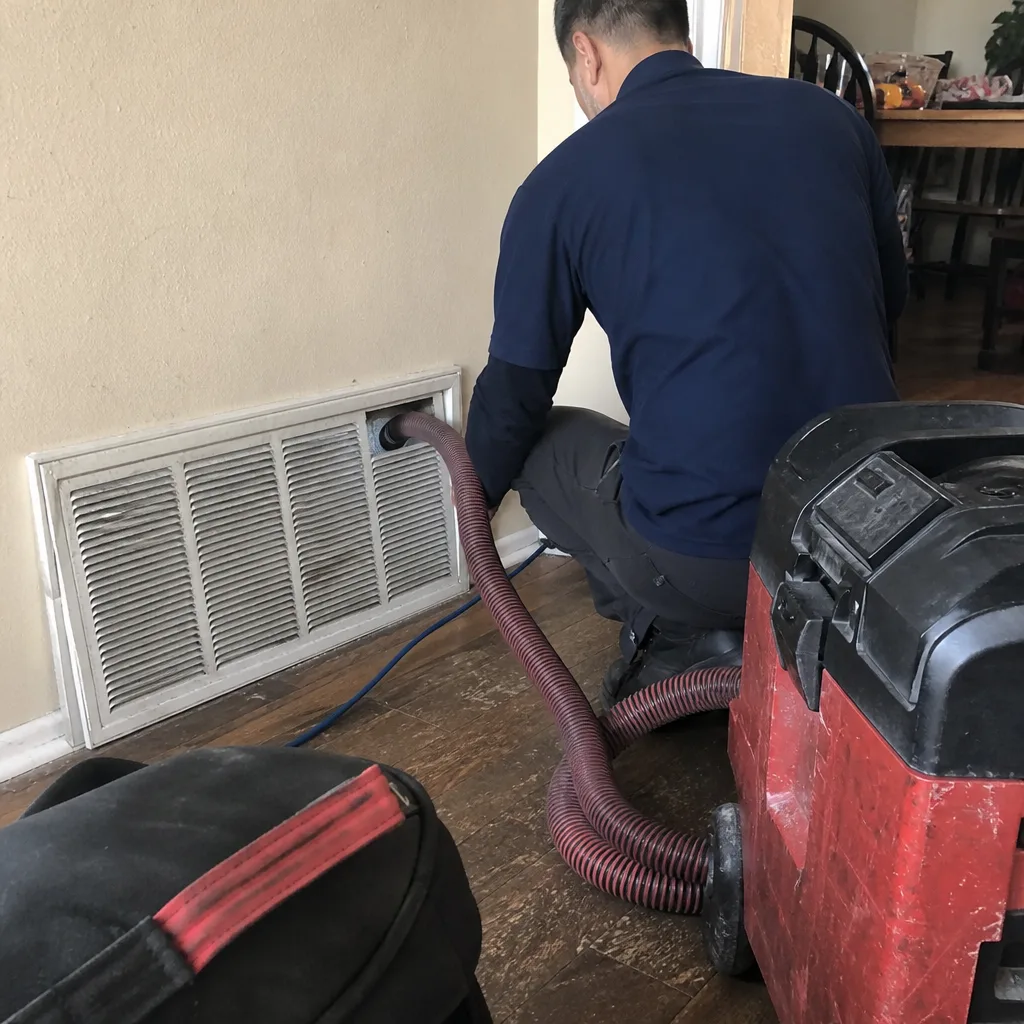 Before
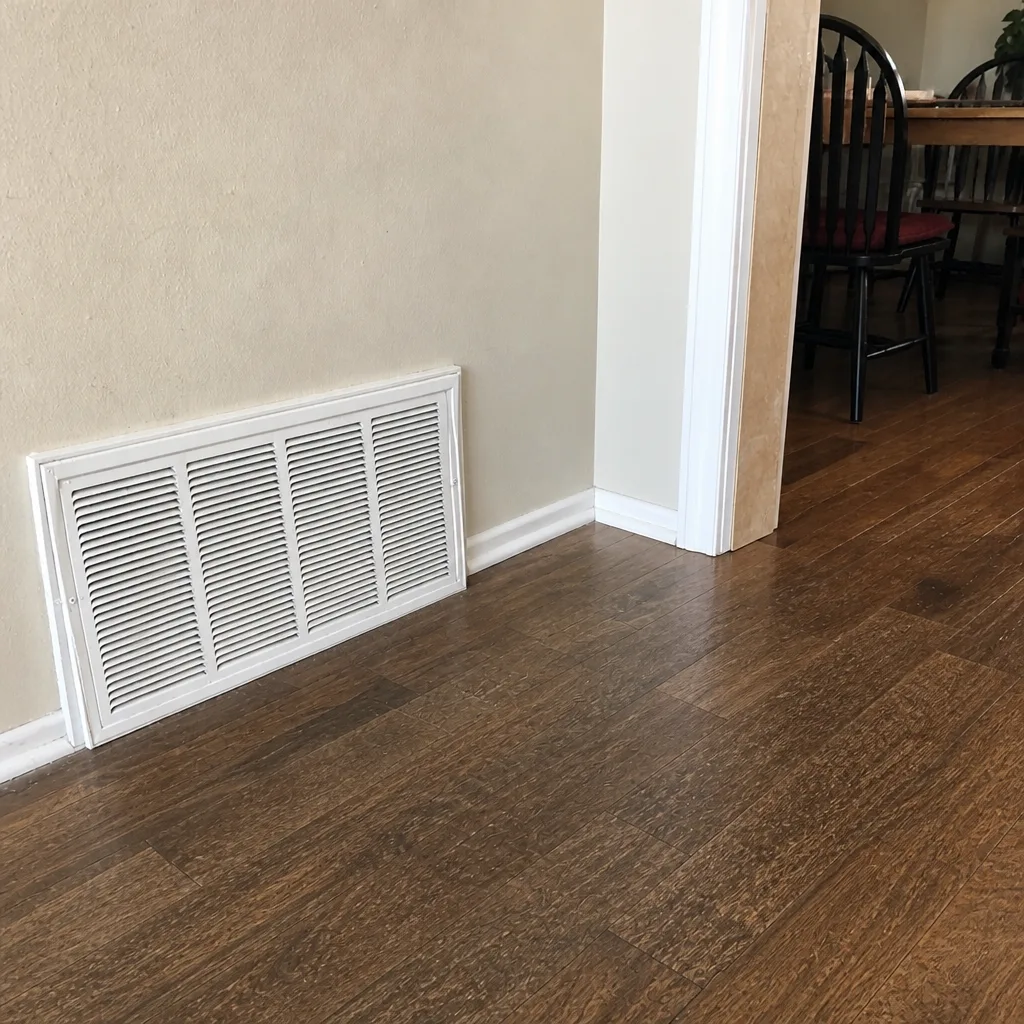 After
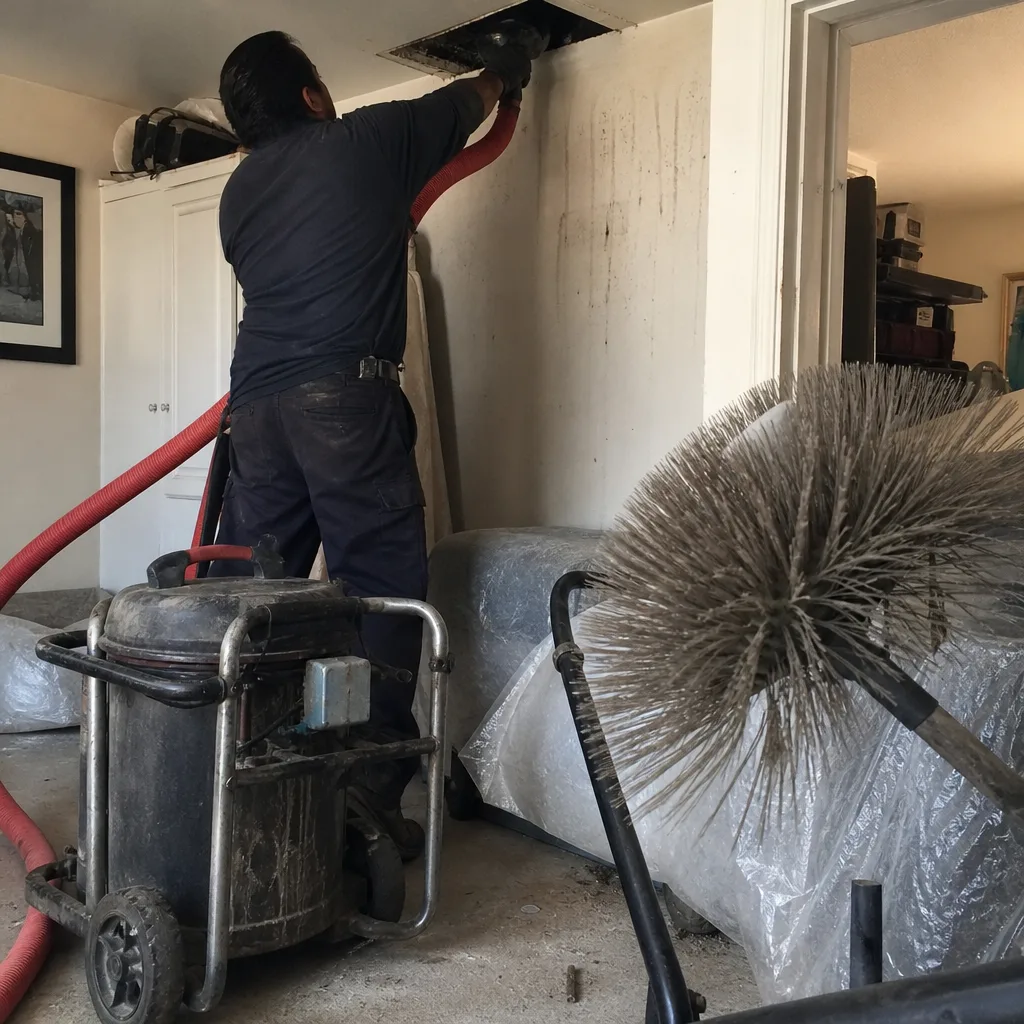 Before
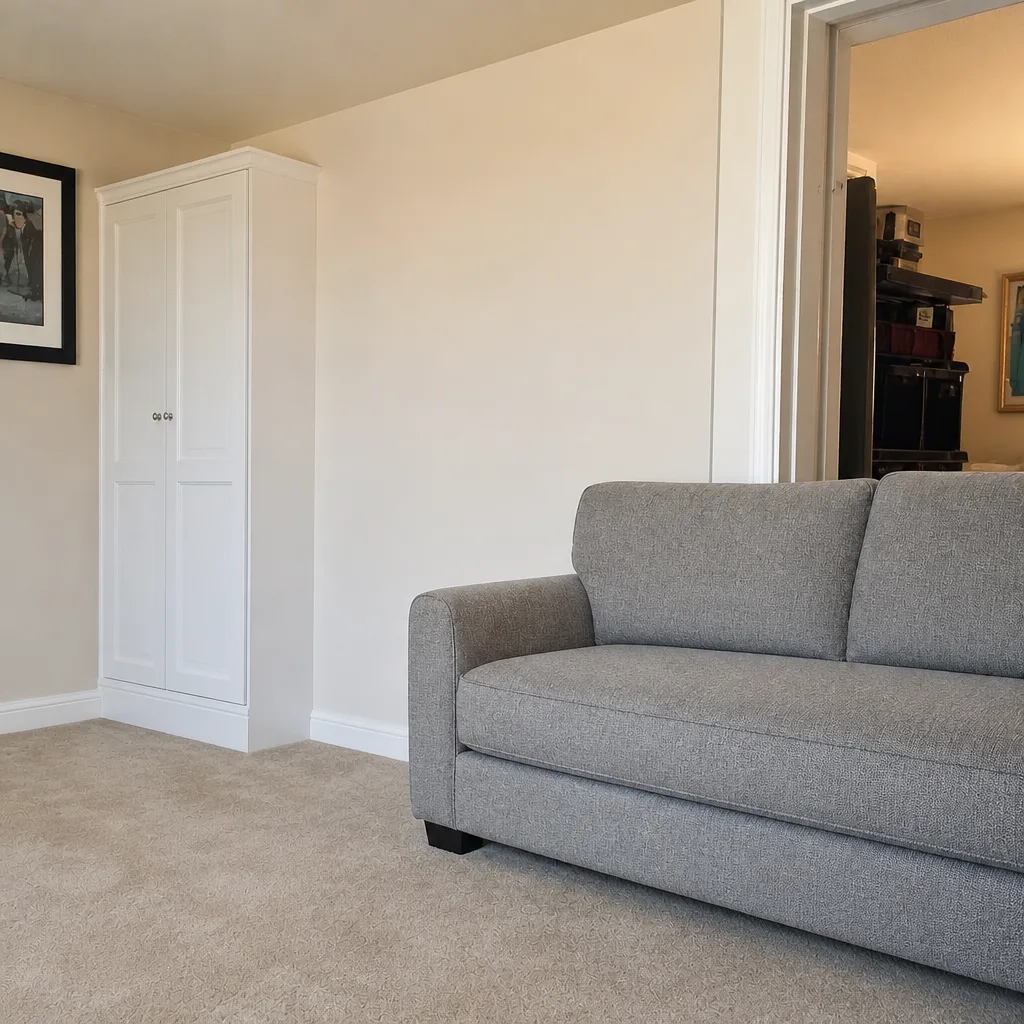 After
 Before
 After
Common Mistakes to Avoid
- Blaming the compressor for uneven temperatures. If the refrigerant charge has been checked and it’s fine, the ducts are the likely cause. Paying for a second refrigerant service when the problem is a collapsed flex duct is one of the most common misdiagnoses we encounter in Huntington Beach.
- Cleaning the ducts but not the coil. Dirty-sock syndrome, or that stale smell at startup, almost always involves the evaporator coil. Cleaning the ducts alone won’t fix a smell whose source is the coil.
- Running the system during a dusty renovation. The blower pulls dust into the ducts, and it can’t distinguish between renovation particulate and normal household dust. Shut the system off when the particulate is heavy.
- Trusting a “clean” report without photos. Any reputable contractor should be able to document what the ducts looked like before and after. You can’t verify duct cleaning you can’t see.
- Replacing the HVAC filter more often as the “fix” rather than a stopgap. A filter catches what it can, but it doesn’t clean the ducts. Frequent filter replacements can mask a duct issue that should be addressed.
- Ignoring one specific room’s temperature. The whole-house average can look fine even when one room is running 8 degrees off. Test room by room, not house-wide.
- Assuming a two-inch filter is the same as a five-inch filter in a tight return system. Filter and return sizing work together, and the wrong combination can choke airflow without triggering any obvious symptom.
Frequently Asked Questions
You need a professional look if you’re seeing two or more warning signs together: uneven temperatures, dirty-sock smells, register staining, dust recurrence, or allergy symptoms that line up with the HVAC running. A single warning sign is a reason to inspect, not necessarily to clean. Call (866) 937-8807 for a free estimate. The written estimate sets the price, one flat price per system.
Cheap quotes often reflect a scope that’s narrower than the job needs: a shop vac and an hour of time, not a proper inspection of the full duct system. Professional-grade equipment matched to the job, like Rotobrush contact-cleaning or Abatement Technologies negative-air systems for heavier contamination, costs more to run and covers more of the problem. Call (866) 937-8807 for a free estimate. One flat price per system, stated before work starts.
It can, particularly if the timing of your allergy symptoms lines up with when the HVAC runs. Ambient air quality issues and duct contamination often look similar on paper but produce very different timing patterns. If symptoms spike when the system starts and fade when it’s off, the ducts deserve a look. Call (866) 937-8807 for a free estimate. The inspection shows you what’s actually there before you commit to anything.
For most homes, every three to five years is a fair range, but it depends on what’s happening in the house. Homes near heavy road dust, homes with pets, homes that have been renovated recently, and homes with older HVAC equipment all tend to need more frequent service. Huntington Beach homes where construction is ongoing or recent often need a cleaning within the first 60 days of the project’s end. Call (866) 937-8807 for a free estimate, and the inspection will tell you where you stand.
Yes, and it’s the most overlooked safety issue in the duct-and-vent world. A clogged dryer vent is a fire risk, and it’s addressed separately from the air ducts themselves. A single provider that handles both saves you from coordinating two contractors. If your dryer takes longer than it used to, or clothes come out hotter than they should, that’s the parallel signal to a duct problem. Call (866) 937-8807 for a free estimate. dryer vent cleaning is available in the same visit as a duct inspection.
The clearest answer: before-and-after photos of your own ducts, not stock images. A professional technician documents what was there before cleaning and what’s there after. Ask to see the photos and ask what the before state was. If a contractor can’t provide that record, that’s the answer to whether the work was verified. Call (866) 937-8807 for a free estimate. One flat price per system, before-and-after photos, and the written estimate sets the final price.
The Bottom Line
Most duct problems get misdiagnosed as HVAC mechanical failures, and that’s why so much time and money lead nowhere. The symptoms your home gives off every day, like uneven room temperatures, specific smells, register staining patterns, dust recurrence, and the timing of allergy symptoms, are diagnostic data. Read the pattern, not the single symptom. Post-renovation is the biggest window to watch, with the first 60 days after construction the critical stretch. When two or more signs line up, call a professional and ask for an inspection before any cleaning. That inspection, plus before-and-after photos, is the only way to know you’re addressing the actual problem and not just the symptom. That’s what this Huntington Beach guide is here to help you do.
If your home is telling you something, we’re ready to listen. Air Duct Cleaning Huntington Beach Pros handles cleaning, sanitizing, duct repair and sealing, and dryer vent service under one provider, with professional-grade equipment from Rotobrush, Nikro, and Abatement Technologies, and support for Honeywell and Aprilaire whole-home air quality systems. We also use Guardsman surface-protection products to protect your interiors during service. Our technicians have up to 10 years of experience. Call (866) 937-8807 for a free estimate. We answer 24/7. Fast dispatch from 7am to 7pm, Sunday through Friday. One flat price per system, before-and-after photos, and a satisfaction guarantee. Clean ducts are a starting point. Better air is the goal.
Written by the team at Air Duct Cleaning Huntington Beach Pros.